> Yet it seems that Nokia phones were loved for their UI. Keypad UIs are hard to create - and competitors certainly had some toxically useless UIs.
Yes, for making calls, texting, taking pictures and changing settings, Nokia phones were really nice. The whole games (Java) and apps (WAP) side wasn't the greatest. To be fair, no one had a decent game and app experience until the iPhone and G1 (Android) hit.
I think this reads like a comment from a market where S60 wasn't popular. They had a capable app platform and it wasn't java or wap, but not really in North America. (That's part of the problem... They segmented their potential customers too much. They could have pushed smartphones in North America at the same time as in Europe. At the time I heard they didn't because it would piss off carriers.)
Late J2ME apps were quite good. I remember having Opera Mini (which was a surprisingly good browser), Google Maps, an ebook reader, a GBA emulator, and even a video player which could play down-converted video at reasonable framerates.
This wasn't Nokia, but I believe the experience on their phones was about the same.
Right, and MS didn't invent solitaire but it is a beloved app on win95. If you're selling the OS on built-in ports of older games I think you're reaching.
We are seeing the history backwards, from present day ro past but remember that cellphones were phones with other computing purposes added, not personal computers with phone capabilities as they are today.
I would really like something like that navi-roller below my spacebars on my keyboard, to use as a way to select from drop-downs and push to enter. Unfortunately keyboard navigation of graphical elements is really lacking these days.
I didn't phrase it very well, sorry about that. I meant that display managers, UI toolkits, and browsers don't support the keyboard as much as I'd like.
But still, adding a mouse-contraption below your keyboard could make it feel like you're using the keyboard to run it while your computer recieves your input as mouse signals, so you'll both be happy.
(Some brand names to search for are Rollermouse, Mousetrapper, Optapad, andErgoslider.)
It was super nice to use at the time but it was also completely unsealed against weather so if a bit of snow or water got beneath the wheel, you would get unusable phone quite fast. Happened to mine even though I was super careful, luckily bought it used super cheap. It was also too expensive just because it has WAP and nothing otherwise spectacular.
It might have helped that the Nordics were pretty advanced with developing mobile networks and mobile network technology. There was also SonyEricson in the region and it kind of makes sense that companies making network technology would also make handsets in the early innings and only later would people realise those are actually two different skillsets and market and need different companies.
You mean Ericsson. It only became SonyEricsson after the Ericsson management fucked up handling a fire at their supplier Philips.
The story I heard was that Ericsson had a culture of not handing bad news up the management change unless it was a real problem. Senior management didn't want to be bothered by small details.
By the time they realised it was a massive problem it was too late to buy on the open market and they were forced to spin out the mobile business into a join venture with Sony.
I don't think that was down to "differences in skillsets". It was generic short sighted management that killed Ericsson's handset business and it could just as easily have killed the network infrastructure side of the company if the problem had it happened there first.
If management don't won't accept hearing bad news from their subordinates they won't be told it.
Sure, the classic UI in 3310 etc ("Series 20") was great, and even "Series 30" was okay. But Series 40 and especially Series 60 were distinctly less well received.
I'm a weirdo who has intentionally never owned a smartphone, so "using up" old dumb phones found in our family has been a fun hobby for roughly two decades. Longest streak was using a 3310 for 12-or-so years, starting when I went to gymnasium and letting it go in late 20s when I was about to become a father. Man, that was one hell of a phone (also serving as a beer bottle opener, etc for many students back in the day).
Looking back, I can't emphasize how much I loved the 3310 UI. Clean, fast, no colors, simply perfect. I'm currently using a Nokia 2600 Classic [1] with Symbian; it feels incredibly slow and cumbersome as compared to the 3310. Literally having to watch a progress bar while the phone's calculator(!) is loading.
But, that darned 2600 also refuses do die (it was already showing dead pixels, so there was some hope in the meanwhile), so I estimate being stuck with this one in the years to come also.
Another fun UI was from a Big Button Phone For Elderly People that belonged to my grandpa. I think it's a ZTE s202 [2]. Unfortunately, the microphone gave up working, so I ditched it.
That world of Old Dumb Phones is actually a lot of fun. And -- it's odd to think how much outdated-but-entirely-usable electronic waste there actually is on the planet.
Thanks, Finns, for enriching the world with the rock-solid 3310, and greetings from the other side of the gulf!
> I'm currently using a Nokia 2600 Classic [1] with Symbian
There's no Symbian on that phone. Symbian was pretty much a smartphone OS that didn't really show up on feature phones. It had a full-blown WebKit browser, native apps, multitasking, productivity suites... you could even install Python interpreter and play with writing apps this way on Symbian phones from around that time (which is what I kept borrowing my mom's E65 for). Later versions even had Qt built-in.
Nokia 2600 Classic used one of the iterations of Series 40. Looking at the videos, it indeed appears rather slow on this phone.
My apologies, and thanks very much for the correction. On another note, has there ever been any custom OSes for the late 2000s era Nokia dumb phones, built by some stubborn hackers? Or some modification software to hand-tailor the Series 40 iterations, e.g remove features the user doesn't need. That would make these phones fun to mess with.
The 3310 was the culmination of Nokia's really good UX work. Symbian convoluted all that and made it a big mess. The manuals for symbian phones were thick and heavy and mostly no one except the engineer-natured people could actually use most of the features.
At least in Finland just having the more expensive phones was seen as a status symbol and usually people were using them for calling, smses and perhaps for emails.
S30 came years after S40 and only targeted low-end. S40 was a rather well-received UI, but neither it nor S30 were ever used on smartphones. The only UI used with Symbian from what you mentioned was S60 and yes, it didn't have a reputation of being particularly clean.
That said, S40 was being used on feature phones for more than a decade (from Nokia 7110 in 1999 up to Nokia 515 from 2013), so it spanned across multiple UI generations and while it was very successful initially, at the end of its lifespan it didn't do particularly well when put on models with big touchscreens.
I loved my Nokia function phone firstly because it was indestructible. A Jeep Cherokee ran it over after it fell through a hole in my bicycle shirt one day. Big scratches on the back of the case but it still worked.
Secondly that Nokia model was just a nice piece of hardware that was easy to use without unnecessary complexity. Plus if you turned off the ringer it would buzz and hop around on the table like a small but enraged weasel. It was hard not to feel affection for it.
This sounds very much like the Nokia 3310 that I once had. It was indeed indestructible. Mine survived a hike gone wrong, in which it spent a good few hours in the pocket of my shorts, and I was in waist-deep water. Back home, the phone was obviously not working. I cracked it open and laid it out to dry on a newspaper. The next morning, I put it back together with a new battery - and it just worked.
In comparision a current iphone 15 is IP68 rated. If you would have the same hike with one of those you could expect to be able to call an uber at the end of the day. I think that is quite neat progress.
Basically the definition of indestructible shifted. Back then it was obvious the phone won’t work after such an immersion. And indestructible meant that with proper care it could be restored to working condition. Today it is more of an exception when a phone dies under the same treatment.
I'd agree. I'm not trying to downplay the current state of the art. My gripe is primarily this: the Nokia 3310 had everything I wanted - long battery life, indestructibility, and the ability to make and receive phone calls, and text messages. Today, I cannot find a phone that checks all these boxes.
It was also relatively light, 133 grams. It's impossible to find something like that now. My phone is 140 g and most phones are closer to 200 g than to 140.
It was sized just right, too. The shape was ergonomic, the keys were tactile, it had a sturdy eyelet for a lanyard ... and who remembers what else. One well-designed phone was what it was.
some portion of nokia definitely did care about technology, form factors, usability, and all the other things that made phones a tech product. their continual wild experiments prove that.
but they also had their normal phones with broad appeal, and could make a good business out of mood-board variants of them. if they didn't make a business out of selling the 3310 in the current season's fashionable colours, they'd have been doing something wrong.
> Yet it seems that Nokia phones were loved for their UI.
I think you're suffering from a kind of observation bias specific to forums like HN, which have a disproportionate number of people with a chip on their shoulder about defunct tech products and companies. The people who liked Nokia's UI are loud and visible about it, especially when it lets them gripe about Microsoft/Apple/whatever, while the people who didn't like it don't feel the need to talk about it.
You're hallucinating a narrative about me based on your stereotypes. I think we all can identify people with Stockholm syndrome love, arising from their past technology abusers.
You could be generically correct. However I never bought a Nokia and I haven't used one much. I am not a Nokia apologist.
I lived through the period, and I'm commenting on what I saw at the time. Sometimes there are fans of a product or brand for good reasons.
Perhaps one of Nokia's major skills was familiarity between their models - especially for keeping the same menu structure and keyboard shortcuts. Familiarity is a powerful force. Oh, and they reliably worked - a definite plus!
I did own mobiles from other manufacturers and I have the scars from dealing with their (edit) painful UIs (Sony, Kyocera*, Motorola, Dell). A keypad and small screen (or worse a one-line numeric display) create some difficult constraints.
Cordless and Voip phones proudly continued the tradition of crappy handset UIs well into the age of iPhone.
* I loved my Kyocera Palm Pilot phone - there was even a LISP App that you could program a simple UI in -magic! Although my first love was an Atari Portfolio DOS handheld (not a phone): https://en.m.wikipedia.org/wiki/Atari_Portfolio
I remember it also had native SIP support and you could configure an account to connect automatically only when the phone connected to a certain wifi network. So I had my work extension on when I connected to the work wifi. It was really nice
I had an N95 when it first came out. It wasn't the screen so much that lured me to an iPhone but the web browsing experience.
Trying to use the browser on the N95 was difficult it was slow to load pages and the reformatting was barely usable most of the time. Everything was high latency even on wifi.
With the iPhone it didn't really reformat websites so much as allow you to render it normally and then zoom and centre on to the bit you wanted to read. This was pre-responsive web design so everything stayed roughly the same as a desktop screen layout.
That and the multi-touch screen were the bits that made it superior enough for me to swap by the time the iPhone 3G came out.
As I remember it, it was the classic Nokia UI that was loved in comparison to the plethora of awkward intermediate UIs that were attempted by Nokia and others until iPhone/Android emerged. It really did feel like phones were getting worse for a few years for negligible benefits.


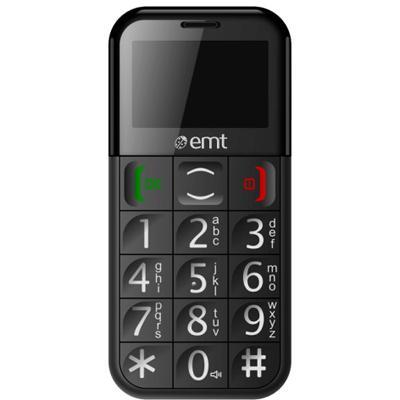
Yet it seems that Nokia phones were loved for their UI. Keypad UIs are hard to create - and competitors certainly had some toxically useless UIs.
Somebody at Nokia got something right somewhere along the way? Maybe the engineers? After all presumably the engineers were eating their dogfood.