Around 2003 I did the art direction (mostly pixel-pushing...) for a game that shipped on a Nokia model. I have no recollection of what the phone looked like, but it was part of the "lifestyle" category described in this article. It wasn't one of the craziest form factors, just a candybar phone in pretty plastic with one of those early square color screens.
Nokia Design sent a massive moodboard PDF, something like 100 pages, with endless visual ideas for what seemed practically like an Autumn/Winter lineup of plastic gadgets. But it was all about the moods. The actual phone's usability and software were a complete afterthought. Those were to be plugged in eventually by lowly engineers somewhere along the line, using whatever hardware and software combination would happen to fit the bill of materials for this lifestyle object.
The game I designed was a "New York in Autumn" themed pinball. There were pictures of cappuccino, a couple walking in the park, and all the other clichés. It fit the moodboard exactly, the game shipped on the device, everyone was happy. Nobody at Nokia seemed to care about the actual game though.
Of course the implication with these fashion devices was that they were almost disposable, and you'd buy a new one for the next season. This would be great for Nokia's business. Unfortunately their design department seemed consumed by becoming a fashion brand and forgot that they're still a technology company. Everyone knows what happened next.
> Those were to be plugged in eventually by lowly engineers somewhere along the line, using whatever hardware and software combination would happen to fit the bill of materials for this lifestyle object.
At an industrial design conference in Gothenburg (spring 2005 iirc) I met a senior designer from Nokia around that time, he had a doctorates in ergonomics and interaction design. He lamented that he was not allowed to so any user interface work, only do the aesthetics. Management from up far had decided that design was only about what it looked like, form was not allowed to work with function.
> Yet it seems that Nokia phones were loved for their UI. Keypad UIs are hard to create - and competitors certainly had some toxically useless UIs.
Yes, for making calls, texting, taking pictures and changing settings, Nokia phones were really nice. The whole games (Java) and apps (WAP) side wasn't the greatest. To be fair, no one had a decent game and app experience until the iPhone and G1 (Android) hit.
I think this reads like a comment from a market where S60 wasn't popular. They had a capable app platform and it wasn't java or wap, but not really in North America. (That's part of the problem... They segmented their potential customers too much. They could have pushed smartphones in North America at the same time as in Europe. At the time I heard they didn't because it would piss off carriers.)
Late J2ME apps were quite good. I remember having Opera Mini (which was a surprisingly good browser), Google Maps, an ebook reader, a GBA emulator, and even a video player which could play down-converted video at reasonable framerates.
This wasn't Nokia, but I believe the experience on their phones was about the same.
Right, and MS didn't invent solitaire but it is a beloved app on win95. If you're selling the OS on built-in ports of older games I think you're reaching.
We are seeing the history backwards, from present day ro past but remember that cellphones were phones with other computing purposes added, not personal computers with phone capabilities as they are today.
I would really like something like that navi-roller below my spacebars on my keyboard, to use as a way to select from drop-downs and push to enter. Unfortunately keyboard navigation of graphical elements is really lacking these days.
I didn't phrase it very well, sorry about that. I meant that display managers, UI toolkits, and browsers don't support the keyboard as much as I'd like.
But still, adding a mouse-contraption below your keyboard could make it feel like you're using the keyboard to run it while your computer recieves your input as mouse signals, so you'll both be happy.
(Some brand names to search for are Rollermouse, Mousetrapper, Optapad, andErgoslider.)
It was super nice to use at the time but it was also completely unsealed against weather so if a bit of snow or water got beneath the wheel, you would get unusable phone quite fast. Happened to mine even though I was super careful, luckily bought it used super cheap. It was also too expensive just because it has WAP and nothing otherwise spectacular.
It might have helped that the Nordics were pretty advanced with developing mobile networks and mobile network technology. There was also SonyEricson in the region and it kind of makes sense that companies making network technology would also make handsets in the early innings and only later would people realise those are actually two different skillsets and market and need different companies.
You mean Ericsson. It only became SonyEricsson after the Ericsson management fucked up handling a fire at their supplier Philips.
The story I heard was that Ericsson had a culture of not handing bad news up the management change unless it was a real problem. Senior management didn't want to be bothered by small details.
By the time they realised it was a massive problem it was too late to buy on the open market and they were forced to spin out the mobile business into a join venture with Sony.
I don't think that was down to "differences in skillsets". It was generic short sighted management that killed Ericsson's handset business and it could just as easily have killed the network infrastructure side of the company if the problem had it happened there first.
If management don't won't accept hearing bad news from their subordinates they won't be told it.
Sure, the classic UI in 3310 etc ("Series 20") was great, and even "Series 30" was okay. But Series 40 and especially Series 60 were distinctly less well received.
I'm a weirdo who has intentionally never owned a smartphone, so "using up" old dumb phones found in our family has been a fun hobby for roughly two decades. Longest streak was using a 3310 for 12-or-so years, starting when I went to gymnasium and letting it go in late 20s when I was about to become a father. Man, that was one hell of a phone (also serving as a beer bottle opener, etc for many students back in the day).
Looking back, I can't emphasize how much I loved the 3310 UI. Clean, fast, no colors, simply perfect. I'm currently using a Nokia 2600 Classic [1] with Symbian; it feels incredibly slow and cumbersome as compared to the 3310. Literally having to watch a progress bar while the phone's calculator(!) is loading.
But, that darned 2600 also refuses do die (it was already showing dead pixels, so there was some hope in the meanwhile), so I estimate being stuck with this one in the years to come also.
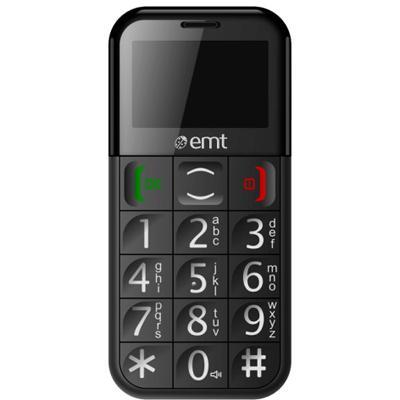
Another fun UI was from a Big Button Phone For Elderly People that belonged to my grandpa. I think it's a ZTE s202 [2]. Unfortunately, the microphone gave up working, so I ditched it.
That world of Old Dumb Phones is actually a lot of fun. And -- it's odd to think how much outdated-but-entirely-usable electronic waste there actually is on the planet.
Thanks, Finns, for enriching the world with the rock-solid 3310, and greetings from the other side of the gulf!
> I'm currently using a Nokia 2600 Classic [1] with Symbian
There's no Symbian on that phone. Symbian was pretty much a smartphone OS that didn't really show up on feature phones. It had a full-blown WebKit browser, native apps, multitasking, productivity suites... you could even install Python interpreter and play with writing apps this way on Symbian phones from around that time (which is what I kept borrowing my mom's E65 for). Later versions even had Qt built-in.
Nokia 2600 Classic used one of the iterations of Series 40. Looking at the videos, it indeed appears rather slow on this phone.
My apologies, and thanks very much for the correction. On another note, has there ever been any custom OSes for the late 2000s era Nokia dumb phones, built by some stubborn hackers? Or some modification software to hand-tailor the Series 40 iterations, e.g remove features the user doesn't need. That would make these phones fun to mess with.
The 3310 was the culmination of Nokia's really good UX work. Symbian convoluted all that and made it a big mess. The manuals for symbian phones were thick and heavy and mostly no one except the engineer-natured people could actually use most of the features.
At least in Finland just having the more expensive phones was seen as a status symbol and usually people were using them for calling, smses and perhaps for emails.
S30 came years after S40 and only targeted low-end. S40 was a rather well-received UI, but neither it nor S30 were ever used on smartphones. The only UI used with Symbian from what you mentioned was S60 and yes, it didn't have a reputation of being particularly clean.
That said, S40 was being used on feature phones for more than a decade (from Nokia 7110 in 1999 up to Nokia 515 from 2013), so it spanned across multiple UI generations and while it was very successful initially, at the end of its lifespan it didn't do particularly well when put on models with big touchscreens.
I loved my Nokia function phone firstly because it was indestructible. A Jeep Cherokee ran it over after it fell through a hole in my bicycle shirt one day. Big scratches on the back of the case but it still worked.
Secondly that Nokia model was just a nice piece of hardware that was easy to use without unnecessary complexity. Plus if you turned off the ringer it would buzz and hop around on the table like a small but enraged weasel. It was hard not to feel affection for it.
This sounds very much like the Nokia 3310 that I once had. It was indeed indestructible. Mine survived a hike gone wrong, in which it spent a good few hours in the pocket of my shorts, and I was in waist-deep water. Back home, the phone was obviously not working. I cracked it open and laid it out to dry on a newspaper. The next morning, I put it back together with a new battery - and it just worked.
In comparision a current iphone 15 is IP68 rated. If you would have the same hike with one of those you could expect to be able to call an uber at the end of the day. I think that is quite neat progress.
Basically the definition of indestructible shifted. Back then it was obvious the phone won’t work after such an immersion. And indestructible meant that with proper care it could be restored to working condition. Today it is more of an exception when a phone dies under the same treatment.
I'd agree. I'm not trying to downplay the current state of the art. My gripe is primarily this: the Nokia 3310 had everything I wanted - long battery life, indestructibility, and the ability to make and receive phone calls, and text messages. Today, I cannot find a phone that checks all these boxes.
It was also relatively light, 133 grams. It's impossible to find something like that now. My phone is 140 g and most phones are closer to 200 g than to 140.
It was sized just right, too. The shape was ergonomic, the keys were tactile, it had a sturdy eyelet for a lanyard ... and who remembers what else. One well-designed phone was what it was.
some portion of nokia definitely did care about technology, form factors, usability, and all the other things that made phones a tech product. their continual wild experiments prove that.
but they also had their normal phones with broad appeal, and could make a good business out of mood-board variants of them. if they didn't make a business out of selling the 3310 in the current season's fashionable colours, they'd have been doing something wrong.
> Yet it seems that Nokia phones were loved for their UI.
I think you're suffering from a kind of observation bias specific to forums like HN, which have a disproportionate number of people with a chip on their shoulder about defunct tech products and companies. The people who liked Nokia's UI are loud and visible about it, especially when it lets them gripe about Microsoft/Apple/whatever, while the people who didn't like it don't feel the need to talk about it.
You're hallucinating a narrative about me based on your stereotypes. I think we all can identify people with Stockholm syndrome love, arising from their past technology abusers.
You could be generically correct. However I never bought a Nokia and I haven't used one much. I am not a Nokia apologist.
I lived through the period, and I'm commenting on what I saw at the time. Sometimes there are fans of a product or brand for good reasons.
Perhaps one of Nokia's major skills was familiarity between their models - especially for keeping the same menu structure and keyboard shortcuts. Familiarity is a powerful force. Oh, and they reliably worked - a definite plus!
I did own mobiles from other manufacturers and I have the scars from dealing with their (edit) painful UIs (Sony, Kyocera*, Motorola, Dell). A keypad and small screen (or worse a one-line numeric display) create some difficult constraints.
Cordless and Voip phones proudly continued the tradition of crappy handset UIs well into the age of iPhone.
* I loved my Kyocera Palm Pilot phone - there was even a LISP App that you could program a simple UI in -magic! Although my first love was an Atari Portfolio DOS handheld (not a phone): https://en.m.wikipedia.org/wiki/Atari_Portfolio
I remember it also had native SIP support and you could configure an account to connect automatically only when the phone connected to a certain wifi network. So I had my work extension on when I connected to the work wifi. It was really nice
I had an N95 when it first came out. It wasn't the screen so much that lured me to an iPhone but the web browsing experience.
Trying to use the browser on the N95 was difficult it was slow to load pages and the reformatting was barely usable most of the time. Everything was high latency even on wifi.
With the iPhone it didn't really reformat websites so much as allow you to render it normally and then zoom and centre on to the bit you wanted to read. This was pre-responsive web design so everything stayed roughly the same as a desktop screen layout.
That and the multi-touch screen were the bits that made it superior enough for me to swap by the time the iPhone 3G came out.
As I remember it, it was the classic Nokia UI that was loved in comparison to the plethora of awkward intermediate UIs that were attempted by Nokia and others until iPhone/Android emerged. It really did feel like phones were getting worse for a few years for negligible benefits.
> Of course the implication with these fashion devices was that they were almost disposable, and you'd buy a new one for the next season. This would be great for Nokia's business. Unfortunately their design department seemed consumed by becoming a fashion brand and forgot that they're still a technology company. Everyone knows what happened next.
Maybe Nokia was simply too early for the vision, or the execution was somehow lacking in some other aspect, as Apple made basically the same bet but seemed to have pulled it off. Maybe the design wasn't designy enough.
I don't really think that the average iPhone user (at least in Europe) gets a new device every season. Actually the opposite is true: Apple does gives you the opportunity to stick to your old device, if you want. iOS 15 still gets updates and can run on an iPhone 6S.
I switched to Apple specifically because Androids I owned aged quickly and badly. Some people can’t drop the kool aid drinking caricature view on iPhone users they hold.
Interesting. I have 3 years old Pixel 6 Pro I use as a phone, 6 years old Redmi MIUI I use to control my various gizmos and 8 years old Galaxy S6 Edge to do yet another set of gizmos. So far all work like charm.
You got the nicer Androids. Most of the Androids on the market unfourtently aren't very good in terms of using modern hardware, using the latest Android OS (shops continue to sell Android phones running versions of Android several years out of date), receiving security updates, etc. My experience of Android had been incredibly poor until I got my S21. My S21 is the first Android phone I've owned (out of several from different manufacturers) that works on par with (if not better than) Apple in terms of keeping the OS up to date and porting back new features to older models. I now only recommend the Samsung S-series to people considering Android, anything else is just asking for trouble.
None at all. I switched since my personal experiences with Android phones were lackluster, typically the software becoming sluggish and unresponsive, usually within 3 years.
As I read it, "people can’t drop the kool aid drinking caricature view on iPhone users" says not that people who hold the caricature view are kool-aid-drinkers, but that they hold a view of iPhone users as kool-aid-drinkers. So I don't think there was any claim that you drink anything at all. (Though I'm fairly sure you do: At least water, or you'd be dead.)
I just went from a 6S+ to a 15 Pro, so I'm an example of this. However, there are some apps that just don't work on the older devices. Snapchat would not work on the 6S+ with the latest OS available. Eventually, the camera took enough tumbles that I'm assuming the lenses were no longer aligned as nothing was in focus.
Also, an iPhone provides so much more utilitarian purposes than anything Nokia ever released. Something as simple as those devices would be much less noticeable if replaced by mood.
There were so many significantly different Nokia phones at one point. I'm talking about after 3310, like 3220, 6600, 7610, 3660, 7600, each design is unique.
Apple has like two models (small and larger) at a time, and you can get them in a couple of different colors. The big design revolution is that they add rose gold or purple or whatever color each year so that the few people who care about showing off their latest model can do so.
Apple has 8 different phones you can buy right now counting all the max/plus models (SE, 13, 14, 15, 15 pro). If you add in the storage differences it is 24 unique circuit boards/phone internals, and colors bring it to over 100 different unique products.
From an inventory and logistics perspective, that's actually pretty wild!
Yeah, but they only release like 4 or so new models a year, excluding storage/color differences, which are relatively trivial, despite making many billions of dollars.
Apple made almost $200B from iPhone in 2023, for example; per model, even including the older ones, that's an insane revenue per model. Not sure I can think of any other product at that level.
This more analogous to different model years of a car, rather than entirely different car models.
The customer immediately and intuitively understands 14 is better than 13, 15 is better than 14, etc.
The main thing clear to me is that the "mental flow chart" involved in selecting an Apple phone is much, much clearer than it would be for selecting a Nokia.
Yeah, but from a software perspective, it's just 2-3 form factors to support (Square Screen, Notch, Cutout). Even those are very well defined that those developing software for it doesn't have to bother with it at all. But you're right, the fact that a red iPhone 15 128 GB is one of the over 100 combinations available is wild. It seems like a smaller pool
Maybe it's a matter of doing things in order ? Nokia had no strong image, they were well established but not like Apple, and also iPhones are flagships with a lot of advanced capabilities.. nokia lineups at the time were very much mainstream/average (the notion of advanced device was also limited at the time).
When you're on top of the industry, you may have a shot at selling lifestyle.
Any other company, if they had the iPhone, would have failed selling it in numbers. Because only at Apple it was preceded by the iPod that set a unique precedent in how much more expensive than all competitors a device could be. And that shift in price perception was deeply connected to the brand. It's easy to forget just how much more expensive the iPhone was than other phones that reached a meaningfully wide audience (or would have, in absence of the iPhone).
Not indulging in the fancy moodboard stuff wouldn't have helped Nokia the tiniest bit.
The success of the iPhone was not due to a price anchoring effect. Sure, if you just wanted to make calls the iPhone was (is) rather expensive. But they were really selling a computer in your pocket, which among other things could browse the web like a computer, display maps from pretty much any location on earth, and replace those bulky Franklin Planners. Not to mention take phone calls. There was nothing like it for multiple years.
I am a pretty late adopter, but I bought the original iPhone. Totally worth it. Two years later when everyone's phone contract was up, they all got iPhones.
Not sure if it's a difference to era, or a just a earlier stage for Apple in the same cycle. Apple made good phones that work and last well, then 'fashionedised' them with different colours leaning into the newest model as a status symbol.
But arguably Nokia did the same, at the time Nokia was a decent phone even if they had no standards between models - no one else did either. Blackberry found more consistency then lent into the status symbol approach.
I suspect that there's probably a common pattern with brands building a decent product, becoming renowned for that, then becoming more fashion like to play up their new status. Eventually someone else able focusing on the product features over the name steals the market.
I’d heavily dispute that - I’m not an Apple fanboy, and also not sure where the Apple regular replacement fallacy comes from.
Back in the day, phones would be sold on 12mo contracts. Now, I’m surrounded by people (who are of very sound means) rocking iPhones from 5+ years ago, which are able to function in the tasks most adult phone users care about just as well as a recent model. Friends are passing old iPads down to kids instead of binning.
Unlike Apple Nokia built their devices to resist breaking and be 100% serviceable down to the smallest parts.
Apple uses metal because it's significantly heavier than plastic and makes phones heavy enough to shatter glass screens and damage their internals when dropped.
Any iPhone could replace its metal housing with an equally strong polymer and become exponentially more difficult to break.
The 3210 era devices had easily replaceable polymer covers; they definitely did break and scratch, but these operated as disposable ablative shielding for the phone itself. Which also had a much smaller screen that was away from the corners of the device. So what people do nowadays on all of these devices is add third party cases to absorb the everyday wear .. but you can always take the case off for a "dress" phone, which like party or formalwear trades durability for looking good.
The Nokia 1040 (Windows, glass screen) was also pretty good at damage resistance. My wife stuck with hers until the Flash started wearing out round about five years in.
> Metal is of course more shatter resistant than polymer.
Yeah, but that doesn't help when the phone lands with the glass hitting something. And a heavier metal phone will have accumulated more kinetic energy during the fall than a lighter plastic one, so have a greater probability of shattering the glass.
Ah, the strong load bearing case and impact resistant glass are just a clever rouse! Their real purpose is to...break more easily! It makes so much more sense now.
Their real purpose is to look "premium". How else would you explain the use of glass on the back of the phone? It's certainly not ergonomics - there are materials that are both stronger and grippier. But it's certainly shiny.
iPhones are built with super tight tolerances. Using the same (or similar enough) materials on opposing sides means not having to deal with different thermal expansion properties. Glass is also radio transparent which makes the NFC radio and wireless charging much easier. It likely doesn't hurt with cellular and WiFi reception either. It's also not going to interfere with the MagSafe magnets.
Somehow Android phones manage to do NFC and wireless charging just fine without glass back panels. And tighter tolerances are exactly that - "premium look".
Tight tolerances are premium construction. Loose fitting parts are cheap and easy. They also lead to increased wear and decreased durability. Dismiss everything as "looks" if you want.
Yes this I think is the core issue: while Nokia phones were all a bit different, they were different in superficial and frankly, low-effort ways.
Form that did not follow function, phones that looked liked some flashy "original-but-not-really-original" design study straight out of a bachelor's Product Design class.
They could never have invented the iPhone, even if they were organised differently. The culture just wasn't there. The herculean drive to simplify, beautify and improve and NOT ACCEPT HALF-BAKED CRAP that propels Apple is impossible to replicate if it is not part of your DNA and vigorously enforced from the very top.
Nokia wanted to "segment markets", Apple wanted to build the perfect phone.
That’s basically it. Instead of the perfect phone, most of Nokia wanted to build the phone that makes you want to buy another phone soon.
I made them a cappuccino-themed pinball game. The underlying idea was that when the customer is bored with the autumn colors and fabric edges and whatever, they’re buying the next Nokia for the new experience.
Apple made a phone whose physical form was adaptable to any software experience. They didn’t need to put in a cappuccino pinball on the device because users could get that, and a million other experiences, from the app store, and mold their own experience.
Some parts of Nokia understood this — Symbian was actually a capable smartphone OS under the clunky UI — but the company DNA kept thinking of smartphones as just another feature column for the plastic fantastic market segment games.
I had a crash course on Symbian at school by a Nokia engineer. Decided to do my all not to have to work with that POS ever. I succeeded.
I know first hand multiple people (some of them my classmates) who decided otherwise and either burned out or quit. The ecosystem was just _horrible_ from the start. The amount of different phone form factors didn't help in the least.
Symbian forced people to code in a weird dialect of C++: no exceptions, no RAII, custom stdlib. It didn't have analogs of std::string and std::vector, grow-able containers were considered too complex.
When Symbian, then called EPOC32, was developed there was no C++ standard library and no compiler that could handle exceptions without severe problems. So they had macro kludges.
They were so unintuitive that some 75% of their coders could not handle strings without severe errors. It did not help that they hired coders directly out of the university (many without a degree yet) and every good coder was promoted to management tasks.
> When Symbian, then called EPOC32, was developed there was no C++ standard library
There was no standard to begin with (actually the first release of Symbian and the first C++ ISO standard are pretty close on the timeline), but STL and likes existed.
Then again, Symbian was on the market until 2013, but programming for Symbian always sucked. Especially in the later years, when Nokia completely missed the advent of touchscreens, and tried to keep afloat by throwing Symbian on a touchscreen and seeing if it sticks.
Qt was always a bad strategy. Sure, in some aspects it was better than anything native Symbian could provide, but in general it was many years behind iOS and Android UI frameworks.
For example, one of the most frequent patterns in touchscreen UI design is an infinite list of views with dynamic data loading and filtering. A lot of use cases fit into this abstraction - social media feeds, storefronts, messaging apps, dictionaries, streaming music players, etc. Android supported this pattern in UI framework from the very beginning and continiously improved it, while Qt's answer at the time was "oh, just write it from scratch".
And the fact that Qt uses highly specific dialect of C++ doesn't really help adoption.
Are you sure you know what you're talking about? Or maybe you were using a very ancient version of Qt. Today's Qt C++ and QML are extremely capable. And I'm building one of those "long lists" (ListView) in my block editor[1] that was straightforward to implement in Qt.
In case you've missed, we're talking about an operating system whose last release was twelve years ago.
The first Qt version for Symbian was around 4.6, and IIRC QML didn't even exist then. The latest was around 4.8, and it did have QML and Qt Quick, but it was too little, too late.
I would like to mention here though that Apple eventually introduced a fair amount of things that Nokia did first with the Nokia N9 (especially once they went buttonless with the iPhone X). Once Nokia had Apple's example to work from, they actually kind of leapt ahead of them for a brief moment, then immediately gave up.
I had a buddy with a Nokia Lumia Windows phone. The hardware and OS was on par or better than the most of the contemporary phones, but it suffered from a lack of third party apps. The Lumia was a pretty kickass phone stuck in a dead ecosystem.
I worked for a research firm that did research for Nokia Design, large scale immersion sessions in exotic locations. One project the deliverable was a set of cards 11" x 8" in a custom box. Each card depicted an insight from the research. I think Nokia Design were charged 25k for the production of these cards. For me this was peak-insanity and two years later Nokia imploded.
Was this the different coloured cases campaign? - I remember it being a little before 2003, but I was working at a company doing work where we had frequent contact with Nokia product managers talking about shipping a news/financial data HDML/WAP app, they didn't partner with us eventually because they needed to concentrate on delivering different coloured removable back case panels - both with the phone and after sale extra packs, so teenagers could choose their phone style.
For Symbian phones Nokia was designing different icons for every phone model. When times started to go bad for them, they introduced common icons for new models and hailed that as a big design innovation.
A similar type of thing has been happening to fashion wristwatch manufacturers, although at a slower pace. Customers no longer purchase as many wristwatches, and instead purchase a single Apple (or Garmin) a smartwatch plus different straps to change the look.
There is a still a strong market for luxury mens' mechanical wristwatches as jewelry. But I expect that will gradually die off as the population of men who grew up wanting a Rolex dies off.
Not really. In fact, its the opposite. The board broad in Elop because they wanted to be taken. Its not so much a hostile takeover but a 'invitation' of takeover.
The oh-so-"intuitive" iOS, with all it's fucking impossible-to-remember swiping gestures this way and that. Aaaargh! Unfortunately Android has been going the same way for the last half a decade or so. :-(
(And Sailfish -- or whatever it's called nowadays -- looked like a contender at first, but then it swiftly marched into the swipey bog.)


Nokia Design sent a massive moodboard PDF, something like 100 pages, with endless visual ideas for what seemed practically like an Autumn/Winter lineup of plastic gadgets. But it was all about the moods. The actual phone's usability and software were a complete afterthought. Those were to be plugged in eventually by lowly engineers somewhere along the line, using whatever hardware and software combination would happen to fit the bill of materials for this lifestyle object.
The game I designed was a "New York in Autumn" themed pinball. There were pictures of cappuccino, a couple walking in the park, and all the other clichés. It fit the moodboard exactly, the game shipped on the device, everyone was happy. Nobody at Nokia seemed to care about the actual game though.
Of course the implication with these fashion devices was that they were almost disposable, and you'd buy a new one for the next season. This would be great for Nokia's business. Unfortunately their design department seemed consumed by becoming a fashion brand and forgot that they're still a technology company. Everyone knows what happened next.