One of the reasons: Products are not taxed by their environmental real price. If environmental damage incurred with "new" (materials, shipping, disposing the older products after a only a few years) would be calculated in the final consumer price, then durable products, and fixing rather buying new, would be the better consumer option. New products are "cheap" in store, are "cheap" by saving manufacturer need to handle support and fixes, but they are very expensive for the environment.
There's also the fact that manufacturers want to make a profit, so it is in their interest to make products that last only "long enough" --- too short and people will complain (but gradually change this, and maybe they may not notice), too long and they'll feel like they're losing money. Washing machines, fridges, etc. are a mature technology that has relatively little room for improvement, so unlike e.g. computer hardware that changes at a much faster pace, the manufacturers have to drive consumption somewhat more aggressively. They also make them far (edit: more, not less) unserviceable than before.
I've always detested the "newer is always better" mentality that the population seems to have been conditioned into, and that the culture perpetuates; I think when the only reason you want to buy a new X is because your existing one is "old" (not unfixably broken, not slow, not missing a feature that would really improve your life), there is something seriously wrong.
I wonder how are Chinese white Goods, since the market is new, manufacturers are quite new and consumers are clearly interested in saving money and in durable goods.
Refrigerators have improved quite a bit recently, they use a lot less energy. Gp proposes disposal fees; energy companies pay modest rebates to haul away old freezers and refrigerators.
People see energy star ratings and Amazon ads, neither of which emphasize lifespan, durability, or repairability. It's like the MHz wars for white goods.
The next level of information is Amazon reviews — generally dominated by people who just bought or don't even own the product... e.g. Nikon and Canon fanboys will go and sabotage the ratings of their arch enemy's products. If you're lucky you sometimes find a review by someone who has owned the product for a whole year.
The ease of price comparison has led to SKU-mutation where the same product is sold in micro variants. This also makes more thoughtful reviews, such as those by Consumer Reports, useless because they can't survey a product field or provide reviews that remain useful for more than a few months (when I subscribed to Consumer Reports I could never find their recommended products on sale -- never).
It's a situation in which rewards two kinds of players — long term brand/relationship builders who try to sell on repeat business based on trust, and short-term commodity-makers who operate on wafer thin margins and think of their product and customer relationship as disposable. Let's say Braun (or one of the other often unaffordably expensive German appliance brands) at one extreme and LG towards the other (there are far worse, LG at least is trying to be a brand).
For electronics, some states now require a fee at the time of purchase, to be put into a fund and used for future recycling, so the cost of responsible disposal is built into the original price: https://en.wikipedia.org/wiki/Electronic_Waste_Recycling_Fee
Its motivation was a different problem, recycling rates: most people balk at paying a fee at the time of disposal to recycle something. If recycling costs money (as it generally does for electronic waste, which doesn't recover enough valuable metals to pay for the process), then people just dump things in the trash instead, even if that's illegal. Collecting the cost of recycling up front, and then making it free to recycle at the point of disposal, greatly increases how willing people are to put their electronic waste into the right bin.
As far as I know that's so far mostly for computers, not appliances, and only in some jurisdictions. How effective it is also depends on how strong the other laws around recycling are: if "recycling" ends up consisting of just shipping the waste to China to be processed in a questionable manner, the up-front price might not be fully pricing in the environmental damage. Overall I think it's a good model, though, to combine responsible-disposal requirements with up-front collection of the funds to do the disposal.
My town has an appliance disposal fee, though I don't know if it's at the level of the true cost. I actually think of it when I'm considering the cost of replacing something.
Anecdote: Just over a decade ago I moved into a house that was empty of appliances thanks to an all too successful estate sale. Literally every single appliance has broken since then, some more than once. I'm lucky that my parents taught me to fix things.
But I remember watching my dad fix appliances, meaning that they weren't 100% reliable back then either. And one thing that might bias my "statistics" is that there are a lot more appliances nowadays. Things that were only barely coming into prevalence while I was growing up: Microwave, home computer, electric toothbrush (yes, I've repaired one), air conditioner (rare in my hometown), various garden implements, etc. Things that don't even need to be an appliance, but are now electric, break.
It's not just about whether appliances need to be fixed, it's also about whether they are serviceable at all. Due to miniaturization and perhaps planned obsolescence, increasingly appliances cannot be fixed at all.
I think there's some truth to this. It's not just miniaturization, but sometimes components are now so tightly integrated and specialized that failure of one part causes a lot of collateral damage.
At least for "major" appliances, I tend to choose based on my best guess of serviceability. I avoid models that have too much electronics, not because I expect those parts to break, but because the complexity might frustrate diagnosis in the future.
There's a lot of repair information online. People enjoy blogging about their successful repairs. But judging from comments on web forums, I'm guessing that a lot of people doing these repairs are landlords. If you buy 15 dryers, and they all break on the same day for the same reason, you'll have a pretty strong incentive to figure out how to fix them.
There's some debate of this exact issue among musicians who play amplified instruments, as I do. There are now tiny little amplifiers, but if you open them up, it's apparent that diagnosis of the circuits (switch mode power supplies and amplifiers) would be daunting, even for a pretty serious electronics enthusiast. There are players who will avoid these products for this reason. I've decided in that case that I will take the risk of having to replace a module or an entire unit in the future, because the portability is actually a benefit.
Indeed there is, and one of the sad things is that this proliferation of easy access to information has seemingly not had much effect on the throwaway consumerism of today's culture, nor in getting people to understand more about the machines they use. A service manual is often literally a Google away (even for older models, there are a lot of neighbourly people who digitise them), and although I've not needed to do any major repairs on my white goods, I've collected from the Internet all the information I need to for most if not all of them.
The other is parts inventory and availability. I was renting a house about 14 years ago and the washer from the early 60s finally broke, not the motor the belts or the pump but one of the timing gears in the clock like sequencer that ran the cycles. The landlord simply disposed of the old unit and replaced it with a new way less well built one.
I called tons of GE parts suppliers and they could not procure a sequencer. Now I would just 3d print the one gear that had worn out. :(
Another option to 3d printing (I wonder how well this works for gears on consumer-level printers?), is to print out the gear pattern on label paper, and stick that onto a piece of plexi glass. Then cut out the circular shape, and finally use a triangle file (along with a vice) to cut the gear notches, using the printed label as a guide. I did this once for a gear for an older Okidata dot-matrix printer used for multi-part forms.
It's not just statistical bias. We know things today are made from cheaper materials(plastics instead metal in washing machine) for example, and it makes sense they'll be less reliable.
Wild: When I moved last year I made .. well not a lot but a fair bit hauling my own junk to the scrap yard.
When it was time to scrap the computer equipment I would have profited from that, too, if not for the CRTs. Those I would have been better off throwing them into the landfill.
That's a bold assertion, but based on the fees I see for disposal of real goods, not close to plausible. Adding another $10 onto a washing machine for a "disposal fee" still isn't going to make the $500 washing machine suddenly comparable to the $1100 one. And if you're adding more than about $10, you're not adding an "environmental real price", you're just taxing people because they aren't doing what you want them to do. The environmental "real price" of a washing machine simply isn't in the hundreds of additional dollars.
I agree. Electronics products need to have the incentive to be built to last, rather than built to last only past the warranty time, to force you to buy a new one after that.
Currently, the incentive is to be build not to last. There is an interesting documentary on this subject called "The light bulb conspiracy" http://www.youtube.com/watch?v=vfbbF3oxf-E
Sure, there is a cost. Which is offset by recycling.
If we all switched, tomorrow, to using long-lived appliances and goods, we'd pay higher costs for _new_ manufactured goods because their a whole lot of their inputs comes from recycled material.
Example: a metal foundry in my home town makes a whole lot of man-hole covers (and like goods). They exclusively use recycled metal. The car that I scrapped last week could be part of a manhole cover next month!
I suppose there is another aspect to buying a $60 item that may last three years compared to a $200 one that may last nine years. That means increased production, employment for manufacturing/sales/marketing, and when it stops working, similar benefits to the re-cycling industry and the employment therein. Keeps the "wheels turning".
Truthfully, I'm not sure if I'm happy or sad being the catalyst of that wheel.
Be happy. The printer you had to buy last month to replace the printer you bought last year because the toner costs _more_ than a new printer is a lot better than the one you had three years ago.
There is this: the toys we're making now are more efficient, easier on the environment, produce less waste in manufacturing and operation, and are even easier to part out for recycling.
By all means, keep driving that '57 Chevy around. But you're better off, and _we_ are better off, if you drive a late-model car.
Well, at least recycling is still widely practiced by journalists.
Every time there is an article about planned obsolescence, we hear about how old appliances lasted forever and how it was better before, yet there is never any actual statistics about the problem, nor any kind of proof that manufacturers are doing it maliciously.
More onto the point, old appliances could also have been of higher quality than today on average, probably because some of them were luxuries back then.
The whole "back then, stuff lasted forever" thing always seemed very susceptible to survivorship bias to me: you get the impression that stuff lasted forever because the old things that are still in use today must have lasted to still be in use while all the things that broke are not taken into consideration because they have long been thrown out.
But these products - dishwashers, ovens, clothes washers - are all fragile today due to their electronics. Touch pads, microcontrollers, ribbon cables, tons of small plastic components. None of these things are made to last 50 years and none of them will be available as replacement parts in the long term.
I've had many over the past 20 years and almost all have failed do to "the board" going "bad", according to the repair techs. Company policy is always to replace the board, and it always is 60% of the cost of a new one, and will take 3 weeks to get, so you end up just buying a new one because you can get it installed in a day or so. And hey, new features, too.
Local independent shops won't fix a blown capacitor or whatever the electronics issue is - they order the parts online. I repaired my oven once - the touchpad keys stopped responding, and I seriously doubt that in 10, 20, or 50 years that particular part will be available.
The fact is that simple devices are more reliable, and could be built again, to last, but people seem to buy for features. We like sensors in our dryers, for instance, and the new ones are more efficient and better in many ways. Just not built to last or be repairable.
I think there's a truth in that though. Rice cookers - decades ago they had no electronics, and was just a case of pressing a switch to complete a circuit to create heat. My grand mother use one that is older than I am. Nowadays rice cookers are full of electronics, I doubt they can last as long. Of course, survivorship bias is still in play here...
>decades ago they had no electronics, and was just a case of pressing a switch to complete a circuit to create heat.
Not disputing your point but that 'old' style of rice cooker is very much still being sold. I have one, recently bought, with just the one switch ('warm' and 'cook' - you have to unplug it to even turn it off) and I use it constantly. Though with electronics in general, you're probably right. Particularly networked devices, game consoles, anything using proprietary software or data formats or which is designed to depend on the cloud.
We're going to regret as a civilization in 100 years when most of our collected wisdom and intelligence has simply vanished into the aether or become utterly unreadble, but find that cuneiform tablets are still around.
Except this article did not talk about planned obsolescence. Just about the race to the bottom. I find that quite unsettling, since we have so much evidence that obsolescence is really actually planned by many big industries out for big buck$. (One of the more documented examples is the light bulb industry, which was fined for this.)
So, when they go talking about ongoing obsolescence, I expect at least a little bit of speculation as to whether this particular one is planned or not. Instead, we merely get some more consumer shaming.
Historically, the intentional reduction of the lifetime of light bulbs from 2.500 to 1.000 hours by the big manufacturers (Philips, GE, OSRAM) in 1940 is probably one the first large-scale examples of this, unfortunately today ubiquitous, practice.
In my own experience I had two cases where this effect was very visible:
I still own a HP Laserjet 4 that I bought for 50 $ on Ebay in 2001. By that time it already had printed more than 60.000 pages (judging by the test page output), and until today it still keeps churning out more and more pages at 600 DPI and less than 1 cent per page (a refurbished toner costs around 40 $ and lasts for around 7.000 pages). The printer itself is probably the sturdiest piece of equipment I've ever seen, weighing in at more than 10 kg and containing lots of metal parts. Comparing this with the current HP model, which consists mostly of plastic parts, still effectively prints only at 600 DPI and for which a 2.000 page toner can easily cost in excess of 80 $ kind of makes you wonder where all the R&D spending in the printer industry went to.
Concerning the washing machine example from the article: I still own on an old Miele Lavamat which has been in service since 1989 (!) and still works flawlessly to this day. New machines are more energy-efficient of course (saving about 50 % of electricity and water compared to the 1989 model) but seem to have a much shorter lifespan as well.
BTW, a while ago Arte (a French/German TV channel) showed a really interesting documentary on this "planned obolescence" ("Kaufen für die Müllhalde" - "Buying for the Junkyard"; unfortunately only in German and French https://www.youtube.com/watch?v=zVFZ4Ocz4VA).
Some appliances haven't really changed much over the years: toasters, irons, kettles. But some appliances have improved their energy efficiency (e.g. fridges and freezers) and some are a little bit more enviromentally friendly (e.g. washing machines).
If you have a (front-loading) washing machine that's still running from 20 years ago, it's probably using more water than a front-loading machine purchased today.
Let's say I buy a top-of-the line Miele washing machine for £1300 ($2000 / €1580) [1] that's built to last 20 years. But 5 years after buying this washing machine, new washing machine models start using 25% less water. I can continue using my washing machine, but it's no longer as efficient as newer models. On the other hand, by keeping my current machine I'm not adding to the growing scrapheap of discarded consumer products. So, for some appliances there is a trade-off between longevity and the possibility that future appliances may be more energy efficient.
If a washing machine uses less water and electricity but fails to actually clean clothes, in what sense is it efficient? Already that's happened to the top load market:
Interesting...top-loading washing machines have never gained a foothold in the UK. Front-loading washing machines are the norm and always have been. Front-loading machines are perfectly capable of cleaning clothes, but sure there are some disadvantages compared to top-loaders: generally longer washing times, inability to add clothes once the wash cycle starts. I'm guessing that the high cost of front-loaders in the US is due to their low popularity?
I think this comment is misleading. In the article you're referring to, it's the more wasteful top-loaders whose performance got worse. The front-loaders which use less water and electricity worked just fine.
Free markets are bad in adjusting for environment costs. What you say here could be useful if implemented into some tax benefits for energy saving products.
"Free markets are bad in adjusting for environment costs"
The concept of "environment" is completely in-congruent with the free market. Because, if indeed you had a "Free market", you'd have to concede that everything is on the market. That includes public property, which is practically never for sale and are mostly hoarded by the state without any chance of private ownership/transfer. That's called a monopoly. Individuals/entities have an incentive to abuse un-ownable(public) property, rather than to develop/protect it like they do for private-property.
So, perhaps you should change your comment to "Regulated markets in the presence of a monopoly state are bad in adjusting for environment costs."
But if we indeed had a free-market, I'd concede that there are a few examples where the market would be slow to "adjust its costs". Prime examples would be air and ocean pollution because they're currently technologically unfeasible to own/delineate.
"That includes public property, which is practically never for sale and are mostly hoarded by the state without any chance of private ownership/transfer. That's called a monopoly."
I don't see how that's a monopoly. They're holding an asset that they don't wish to sell, but there's plenty of competition in near-perfect substitutes. How is this more of a monopoly than Ted Turner's 2 million acres? You can't buy that specific piece of land, but there's lots of land for sale that might work very nearly as well for your purposes.
To illustrate my point: Please tell me where/how can I buy the land for a river/beach in the United States? How about some 30x30 meters of lagoon beach? I'm filthy rich, and I want to own a river... Thought so.
Here is the formal definition of monopoly that I just looked up: "the exclusive possession or control of the supply or trade in a commodity or service."
The fact that there are near-substitutes is a factor in preventing monopolies from forming in a free-market. Not so in the case of a state-lorded market, where there is no near-substitute or alternative for a lot of things. This encompasses a lot of things, and public property is one of them.
Another definition of monopoly: "a commodity or service in the exclusive control of a company of group." Let us not forget that the state owns all land, and you're merely renting it from them. If you doubt that, please proceed to not pay your property taxes and let us know how that goes for the "ownership" of your land/property. Or for that matter, hold land that the government wants; it will eventually cease it from you via eminent domain.
However, I will conceded that I probably didn't use the word monopoly in the standard, cookie definition. But that's usually the case when arguing against a behemothic concept such as the state. Perhaps you'd look past that, and understand the point I was trying to make rather than the pedantic, non-near perfect usage of a word. I tend to do that with words :)
If you restrict to seashore and similar areas that we have categorically removed from the market, then I totally agree that the government has claimed a monopoly on those areas. That's not all (or, I think, most) "public property".
Completely agree with "regulated markets", or better "lobbied government markets". The point in question, however, is that if everyone is doing the best for her/his own interests, there is no invisible hand for the environment: the free rider problem. In Adam Smith's defence, in his times people were not even close to the modern times of extensive planet resources dilution, oceans, forests etc
Well, I guess that depends on our definition of environment. It's clearly vague, and the lines are completely blurred.
So yes, I'd agree with you, there is no one that is currently interested in the stewardship of the "environment" except for principled individuals that believe it should be taken care of. There are plenty of examples where people own pieces of land, and they take very good care of it (and sometimes opposite). I grew up in a country where most low-mid and middle class individuals owned sizable plots of land. They spent quite a fair bit of time and money tending to their plots because it was theirs and represented value to them. Even more so for commercial versions of such ownership; particularly forestry enterprises.
This is the case that free-market individuals make for the environment. Which is a concept that a lot of state-centered individuals find flawed in free-market thinking. Precisely because the definitions of "environment" differ. To state-centered individuals, the "environment" is something non-concrete, over-arching and pretty much difficult to delineate from the rest of the land. The opposite of that is where someone considers land to be theirs, for their exclusive use, and will thus develop it and maintain is value. If that value is due to the scenery, then it will be preserved.
So how does that figure into all the individual pieces of land that people own? Is my land not part of the larger eco-system of the planet? I'd argue it is, and I take pretty darn good care of it. Are we somehow saying that we can't extrapolate this to a larger scale?
For further reading, you might find this interesting:
But if you have land near the ocean, you may sail a few miles and throw it there. Your land is clean - the eco-system is not. Or, say, you have a river, and take most of it's water: your land is better off, then next lands were the river would have flow to not so much, and so on.
Sure could, and I'm guessing the current law framework would semi-allow it. Do you think it would be different if people were allowed to own pieces of ocean/sea?
It's impossible for a consumer to know that a supposedly high-quality washing machine will last longer than a cheap washing machine - longevity reviews are impractical with a changing market.
In the past, manufacturers have overcome this by offering a guarantee. But, does a manufacturer guarantee even act as a true guarantee? How many claims are brushed off with an excuse? How many white goods manufacturers will exist in their present form in N years time?
It's impossible to know how long they will last but you can make some sort of guess - my repair guy said don't buy Indersit, they all pack up in no time and suggested Electrolux which I went for - fingers crossed.
We could do with some better info on average life - someone like Appliances Direct who cart away a lot of broken machines could benefit the world by publishing how old different models were when they croaked.
Heh, I am from Brazil and own lots of eletrolux stuff, and I had been telling people to.not buy eletrolux, their stuff breaks really fast, is badly designed, and their service people are rude and not interested in helping at all.
Yes, it's the same here in Australia when it comes to Electrolux (and their group of companies). Our fridge failed just after two years of purchase. They were rude when it came to warranty and charged through the nose to fix the problem.
I own several microwaves (that frequently start to work with the door open... seemly shitty quality switches) and a fridge.
The fridge in particular has a "easy defrost" button, what it do is turn off the fridge until the fridge is defrosted, the problem is that there is no way to undo it, and the button is in a place that is easy to bump, if you press it accidentally, your food still spoil...
Also the button is prone to get stuck, when I called a technician, I started by saying the problem, and he figured that it was a eletrolux fridge on his own, the problem is really common (and let's say, that a fridge that shuts down is one of the worst problems to have on a fridge, much worse than failing lights or door hinge issues, those are annoyances, but don't waste food).
Also eletrolux never fixed my stuff, both the fridges and the microwaves I ended fixing myself, every time I contact eletrolux it is a sad thing, they are so bad that I don't even get disappointed anymore.
Also when I disassembled the fridge, it was one of the most shoddy constructions I ever saw, stuff glued with tape, misaligned plastic parts, missing bolts (that cannot be installed anyway, because the previously mentioned misaligned plastic parts), and so on...
When it happens again, pull the plug on the fridge, wait 5 minutes and then plug it in again. Your food will likely not be spoiled yet and the microcontroller will be re-set. With some luck it will then be a fridge again instead of a cup-board.
It is not a microcontroller, it is a mechanical switch to the engine power. My "fix" was to mechanically force the switch to a reset position, and the issue is that frequently the switch get stuck in place.
Theoretically yes,.but in Brazil.this never work. For example the Toyota Corolla accelerating by itself happened a lot in Brazil too, yet here Toyota fixed no car and didn't paid anyone.
There is kind of a downward spiral here in regards quality tolerances that is driven by price. As items become cheaper then it costs a manufacturer less to fix or replace an item if it fails within the warranty period. This then allows a further fall in quality tolerances and so on.
There are some rose tinted spectacles going on here.
White goods in yesteryear times were not that reliable or as good as the author imagines them to have been. They broke down, had design faults, had poor choice of materials and so on.
Some things, particularly microwave ovens, are disposable. You spend £30 and get a new one. You don't get it serviced for £££ or buy the parts. Washing machines are a bit more borderline, you can order a new belt or heating element and put it on all by yourself, following some guide on Youtube and getting the parts from eBay.
Eh. I've repaired a few modern appliances, worked on a 2003, 2001, model cars.
Washer was a cinch, thanks to the repair manual (found online). The only difficult bit is diagnosing the car [1] was the makers assumed I'd have a diagnostic computer to plug into the port and read off whatever the car thought was the problem.
Capitalism to the rescue! Any parts store (O'Reilly, Autozone, etc) will cheerfully plug their diagnostic computer in and _tell_ you what the problem is.
[1] For non-obvious faults. When my Explorer threw a rod, that was painfully obvious.
My old (1990s?) washing machine broke recently. While that's not a great advert for older goods, what happened next was that I took the lid off, had a bit of a poke about, decided that it was probably worth fixing it, and got somebody to fix it for (iirc) about £70 (parts + labour). I haven't been through the same process with a newer machine, but I suspect that's not how it would have played out with a machine from the last few years.
Another of the reasons: Products are manufactured with lots of automation, and the workers have 3rd world wages. Products are repaired manually for 1st world wages.
I've noticed this in China where repairs are far more common, faster, and cheaper --- e.g. in the West the usual repair on laptops consists of swapping parts like motherboards, but over there you can walk into a repair shop and have component-level troubleshooting and replacement done by someone with a hot air gun/soldering iron while you wait and watch, for cheaper than the cost of a whole new assembly. Ditto for mobile phones. There's also far more recycling/reuse going on there too, which while it may be a bit unscrupulous, could be somewhat better for the environment.
Do not let them repair your phone out of sight though. They'll fix your problem but a new one will pop up next week because they've swapped some of the parts that weren't broken.
It was also still cheaper for us to get a new washer machine than have the old (landlord's even!) fixed. At least we don't have to worry about a dryer :)
We bought a new washer/dryer 2 years ago. Already needed service in the first year, and the washer is rusting already, and it's out of warranty. These weren't the cheapest, but not most expensive - around $800/each, IIRC. There were some cheaper, and many far more expensive (some $1200-$1500 for each unit).
The problem with "well, these are using lesser quality parts" argument is... I seem to have no choice. AND I'm skeptical that the $1800 washer is actually going to last any more than the $800 washer, given the track records.
When the identifiers are SQ-WSHR-2700 ($800) and SQ-WSHR-2720 ($1800), both built in the same manufacturing facility, and the sales blurbs just show one has 3 extra cycles and an "eco-cycle"... what incentive do I have to trust that one is actually going to last 15 years while one will only last 3?
Miele is overrated IMO. The brand tries to build some sort of hype around its warranty and higher price, but it fails to produce better results as many independent tests have shown. I own a Miele W2365 washing machine and a Miele T4223C tumble dryer, both sold and installed by a specialist retailer. The washing machine fails to wash properly at lower temperatures (<= 40°C) and the tumble dryer ruins many (suitable for dryers!) clothes because it seems to have no temperature limit and gets far too hot. They still both "work" after 8 years though ...
Older Miele models are real work horses that run forever. I have seen several models from the 1960s to 1990s that run 24 hours a day in a testing department.
I don't disagree, however you're sometimes limited by geography as to what's reasonably available in your area. And even brands that had historically been considered 'safe' (from my youth) no longer appear to be so.
The article didn't answer any of the questions I had. It reads a bit like someone was asked to expand the title into two thousand words. Half-thought explanations, some anecdotes, but almost no data.
So both prices and lifetimes have dropped... but how much and how fast? Are we paying more dollars per lifetime year?
What about interventions to fix the incentives in the market? What's been tried? Who's pushing for reform? Are we likely to see any? Are there some reliable signals of long lifetime we can incentivize?
For something like a washing machine, I think I personally see older, second hand goods as worthy competitors for new ones, in terms of their likely remaining life expectancy. The fact they tend to be cheaper seems almost perverse.
I lived in several.different places recently with their own washing machines. All.economical.machines not only.failed to clean the clothes in one attempt (in total wasting MORE water instead) but some also made clothes dirtier unless you disassembled the filters and cleaned them very carefully after each attempt, resulting that sometimes it was faster to hand wash instead.
I currently live in a rented apartment, and I don't bought a washing machine, the ones available are too flimsy, waste time, waste water and power, and thus are a complete waste of money.
Unfortunately the real reason is manufacturers are better at being able to make machines to meet consumer expectations. In the past they tended to over engineer machines - now they are able to build the absolute minimum level people are willing to accept in order to meet a price point.
The assumption that these things should be cheap is not new.
I bought my first washing machine - a high speed front load type - about 12 years ago. It was ~$1k, but for several reasons I thought it was a good buy. The cashier made a big deal about it when I went through the checkout line, laughing loudly at my stupidity for purchasing such an expensive model and actually exhorting the cashier in the next lane to do the same. Didn't I know that I could have got a washing machine for $300 or less? I was really embarrassed; I've never bought another appliance in-store.
I'm still using the washing machine. I have had no problems with it and it would not surprise me if it's the last washing machine I ever buy.
"The cashier made a big deal about it when I went through the checkout line, laughing loudly at my stupidity for purchasing such an expensive model and actually exhorting the cashier in the next lane to do the same.[..]I was really embarrassed;"
I'm sorry you experienced something like that. That is a positively horrible thing to do to a customer. I would have gone straight through to the manager to complain. And then I would have told him I'm not buying it, and he can thank the two cashiers for that. That would have probably been quite a chunk of their salary that they wasted for the store. They would have probably gotten fired for it. It's one thing to give advice, and a nudge if a customer is misinformed by the sale staff. It's something completely different to mock/embarrass him for whatever smart/stupid buying decision he makes.
On the plus side, at least you're glad about your purchase now and have gotten a good deal for your money 12 years later.
My grandmother's Maytag washing machine from the mid-1950s was still working up until about 5 years ago. It suddenly stopped working and all it needed was a new belt. However, this was in a house that we were selling and had no need to keep a machine long-term.
We sold the washing machine and dryer to a film studio/prop company for enough money to buy more than a dozen washing machines.
When I'm in the store shopping, yes I want all the latest features and options and a nice color. But once I get it home, really the only thing I want is for it to be indestructible.
A company with a reputation for insanely high durability would definitely garner a premium. It's like innovators dilemma making a machine which would last 50 years with minimum maintenance, but if a startup offered such a machine and could demonstrate superior engineering, I think it's a winning recipe, although it's a slow growth play not a rocket ship.
Reminds me of the cost analysis posted recently on the Tesla showing it might be cheaper than an Odyssey, due to massively higher residual value and lower maintenance and upkeep. Could you make the Tesla of kitchen appliances, I think you could!
I've noticed a vicious cycle much like many of you that I'd blame on the manufacturer more than the consumer. It goes like so: consumer buys expensive product, product lasts 10 years then breaks, consumer can't buy same product again so they buy similar product from same manufacturer but product is now cheaper. Product lasts 5 years. Consumer is upset that product didn't last and wonders why they spent so much money. Consumer buys 3rd product from same or different manufacturer but buys cheaper or cheapest model due to not wanting to waste money. Product lasts 2 years. Consumer vows to only buy cheapest product from now on. Manufacturer continually offers cheaper products that last less and less.
Manufacturers will have a hard time convincing consumers that their products will last because of what the last decade had shown us so the only solution is not to offer a product so cheap that people will take a chance on it because then people will think the quality goes in hand with the price. Nay, the solution is to warranty the product much longer and earn the trust of the consumer.
Manufacturers likely won't do this because a 20% profit margin on an expensive product lasting 10 years isn't nearly as appealing as 3 3.333-year lifespan products at 40% margins each.
Manufacturers don't need their product to last long, just longer than their competition's products.
I've tried to counter this with buying commercial/business oriented items. E.g. my 8 year old HP nx6320 (since discontinued) is built like a tank and still works absolutely fine (I still see them working as cash machines/receipt printers in shops). Because it is a business segment machine, it cost me a fortune at that point of time. I bought a new lighter/smaller Dell because I was tired of hauling the HP and it is also a business segment machine. It would be interesting to see how long it goes before having problems.
Well, there are still brands that are long-lasting, but also pricey. I bought a Miele washing machine for $1100 in 2006 and fully expect it to last 20 years. This brand has a reputation for lasting.
Washing machines haven't changed that much. The main points of failure are the heating element, the onboard computer and the brushes on the motors. That last one is where repairmen get you - they say your machine is "practically dead" (the brushes usually last 5-7 years), buy a new one or replace the motor (usually expensive). Older machines had induction motors that lasted forever (but used more power and were louder).
I recently came across Bundles[1], one of the companies trying to fix this. I saw them pitch at Demo Day of a Smart Energy themed accelerator programme and was very impressed by what a single entrepreneur has already achieved in such early stages.
Staber has an interesting design. Top-loading horizontal-axis washers. They were featured on "How It's Made" a few years ago. Not cheap, but seems to be made from quality materials (stainless-steel tub and basket).
Yeah, I think that line of thought betrays how young the author probably is.
Back in the 90s people were complaining about planned obsolescence, when TVs and vacuum cleaners were dying after a few years, as opposed to the TVs and vaccum cleaners made in the 1970s. My parents had a vacuum cleaner that was over 35 years old and they still used it.
Gonna need a citation on that claim against Audi. The vast majority of Audi/VW cars are equipped with a 2L turbo that is probably the most bullet-proof motor made today. I personally put 120,000 very hard miles on a VW GTI equipped with the signature 2L turbo.
I've seen multiple folks on the MKVGTI forums approaching 200k miles with no issues as well.
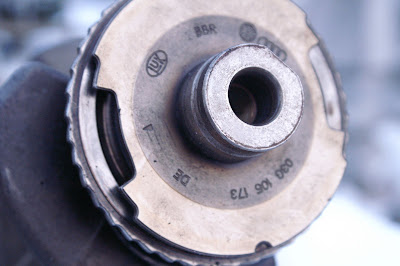
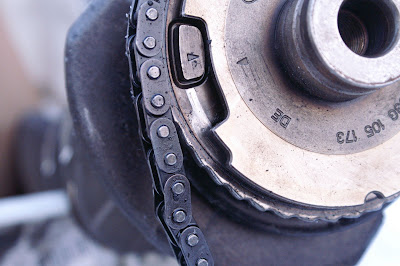
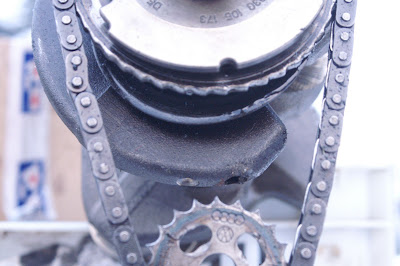
VW answer: this part is not serviceable, whole crankshaft needs to be replaced :D Why is it made out of putty while smaller sprocket (the one taking more force) is still 'working'?