"82% of Prime members buy on Amazon even if the item is less expensive somewhere else"
The supposed "source" referenced another study (sans link), so I can't get the answer to the obvious question: Was "less expensive" computed using the marginal cost to the customer of this particular purchase? Meaning, do other sites offer the widget for a few dollars less but charge a lot for 2nd day shipping?
I'm a Prime customer, and I've mostly given up on comparison shopping for small items. Amazon's prices are usually good enough that, especially coupled with the free 2nd day shipping, my effective "wage" for comparison is too low to make it worth it. Nevermind the "it just works" feature of Amazon's system (not just website -- the entire process by which a widget comes to my house).
My wife and I have forced ourselves to change our shopping behaviors and ask ourselves before thinking about leaving the house, "Do I really need this thing now, or can it wait a day?" $4 for overnight shipping is a bargain compared to wasted time, gas, etc. Stores are harder and harder to justify. That my wife finds ordering a bunch of clothing, trying stuff on at home, and returning what she doesn't want to be much more efficient makes me wonder what the future of retail clothing becomes. She sometimes even regards the "home try-on" process as superior because she can see how a new item of clothing looks with other, previously purchased garments.
I think the other thing that's missing from this is that Amazon's customer service is really very good. I'll spend the extra dollars buying something from Amazon than, say, one of their third-party merchants, because I know Amazon will take care of me if anything bad happens.
Yet another thing missing (which is huge for me personally) is predictability of shipping.
If I buy something on Amazon via Prime (which means Amazon themselves will be fulfilling it), I know that if I order it 2 day shipping it will arrive in 2 days. If I bump it up to next day shipping (within the clearly marked and real-time updated window of shipping) it will arrive tomorrow.
Amazon and Newegg are the only two web retailers that I trust to predictably get my items on a set time-table. It is all too common for other online sites to gladly accept orders for next day shipping or two day shipping at ridiculous markup and then actually use those shipping methods but only after sitting on the order for days before actually shipping it out... not exactly what I had in mind, guys.
Agreed completely. I don't think a lone up-vote fully conveys how big of a deal this is to me. I've had horrible experiences with other sites not being able to give me a delivery date, or even worse, giving me one and not making it. I called pcrush.com a while back to confirm that ordering with 2-day shipping would get the item to me by that Friday. When it hadn't arrived by Saturday, I called back and learned that they had just shipped it that morning!
I don't think Amazon has ever been late in the two years I've had prime.
As much as I like moo cards I find their shipping options frustrating. You can order 2nd day shipping or even overnight shipping. But you can't jump ahead in the print queue, which can take as long as a week, making most of the shipping options completely meaningless.
Completely true. I bought shoes on Amazon, after 3 months they started to fall apart. I went on service chat and they refunded my full cost immediately and didn't even ask for me to return the old shoes.
I can kind of see how this works for merchants selling through Amazon. AMZN provides the customer with a good experience, makes customer feel valued, customer is more inclined to buy more products despite a bad moment knowing they'll be taken care of.
Probably not how it pans out in practice, however.
the problem is, the customer is not always right. but your money and product is gone regardless...unless you're willing to jump through a ton of dispute hoops most of which take a long time and end up in favor of the customer on some obscure seller agreement clause.
As a customer, that's how I want it to be. One of main reasons I consistently order from Amazon (and buy Prime) is the bad experiences I've had when trying to get customer service / return / exchanges on other sites. Saving $5 or $10 isn't worth it if I have to waste an hour dealing with issues like getting the wrong item shipped to me, or trying to return something.
It's hard to argue with the logic behind a customer-centric policy here. Merchants are going to go where the customers are and they can spread the cost of dispute resolution, etc over far more transactions than an individual. Makes sense to inflict the "pain" on their side.
In all fairness, if a few unfairly returned shoes are already almost figuratively putting you in the red, then you just might be in the wrong business or doing it wrong because online retail has clearly become this pond of a few HUGE fish who can easily afford to not care at all about returns - and customers love that and will keep coming back.
The only reason merchants get any business on Amazon is that customers are at least partly protected by Amazon's support infrastructure.
I'm sympathetic regarding some of the more egregious stupidities Amazon has foisted on some merchants, but when it comes to this part, it's pretty unambiguously what you signed up for.
Consider it from the other end: If you were selling autonomously on your own site, would you treat customers this well? What does your answer say about you? What impact do you think your answer will have on potential customers' choices?
Also, amazon offers you free return-shipping and no worries. Typically the 3rd party merchants here in Euroland are literally only a few bucks cheaper on a 3-digit purchase but they take (much) longer to ship, you have to pay for return-shipping and often you need to pay for shipping and handling as well. On top of that, they often go with the absolutely cheapest possible shipping option to squeeze out a few more bucks and that often fails delivering to a DHL Packstation (a popular fully automated self-service post box here), which is a major annoyance. I specifically order to my Packstation so I do _NOT_ have to deal with the horror and pathetic sight that is a German post office in the evening.
On top of that I am starting to really, really hate the amazon market place because their product offerings are horribly unorganized, they list in lots of wrong but popular categories and they put something up as a different product despite the same product already being there at least twice.
Also I absolutely love ordering online and getting stuff in the mail so I decided to pay the I-dont-know 20 bucks a year for the Amazon Prime subscription and get free next-day(!) delivery on each and every order. Why would I give that up and pay for the slower and worse alternative?
No. That's true for the backed by Amazon stuff. The bulk is small shops to whom Amazon is just another layer between your credit card and them. For those cases they do nothing.
I've returned plenty of things and I have never had this happen. I have however had them tell me to keep the item when the return shipping was going to cost them more than the item itself is worth. Which to me is good customer service and smart business thinking.
The magic phrase to search for is "extraordinary number of incidents with your orders and corresponding shipments" which is from their standard form email when they cancel your account.
My guess would be that Amazon's business model is very sensitive to the return rate, since returns are very expensive for them: their whole system is built around getting product out the door to the customer not the other way round!
One or two expensive returns from a customer could wipe out all the profit they'll ever make from that individual. If they believe they can identify those customers who are likely to cost them money, it's in Amazon's interest to cut off service to those customers as early as possible.
Perfectly rational behaviour, but I imagine highly frustrating for those customers who naturally feel that they've been somehow accused of wrongdoing when Amazon decides it doesn't want to do business with them any more.
This behavior is not limited to Amazon. Big-box retailers and department stores also ban people who abuse the return policy. And, as an honest shopper who likes being able to return things from time to time, I'm glad for it.
I think the troubling issue for some is that they can return things for perfectly good reasons, the items in question were in fact faulty, or mis-described on the website or whatever, but Amazon canceled their accounts regardless.
Of course it's possible that those who go online to complain about this are in fact abusing the system, but from Amazon's POV it makes perfect sense: they don't want picky customers who will return borderline goods because it will eat into their margins. It's much more profitable to sell to those who won't notice the dead pixels on their laptop display (or whatever the problem happens to be).
>especially coupled with the free 2nd day shipping
There's an added bonus if you live near a distribution center, in which 2nd day often turns into next day. In a handful of cases, I've had next day turn into same day -- ordering something before I go to work, and finding it was delivered in the middle of the afternoon by a specialty shipper like LaserShip.
Guess I'm near a distribution center then as I generally find that free super saver shipping, which is supposed to take 5-8 days, ends up being two day. Definitely hinders my urge to go Prime.
It's especially magical if you're shipping to Manhattan as they offer same-day delivery. It's such a delight to click "Buy!" in the morning and have it by mid-afternoon.
In addition to the free shipping on 2 day delivery or the $4 next day delivery we purchase a lot from amazon on our chase/amazon credit card due to the 3% cash back on purchases from amazon. We pay the card off every month and then by the time Christmas rolls around we have tons of points to redeem. We also typically buy gas (2% back) and a few other large recurring monthly expenses on the card for the 1% cash back. I wouldn't use it for anything that I wasn't paying off immediately though as the interest rate sucks. The combination of prime and the card have significantly increased the amount we spend with Amazon.
The extra 2% back (assuming 1% from another card) is nice. While I do this as well, it does not end up making an impact on most stuff when I run the numbers. Combined with the shipping & customer service convenience though... :)
The 2% gas (& food?) / 1% everything is the same as any other (good) card.
Also yes, pay it off immediately. Not paying off any credit card immediately is insane, because the interest rates on basically all credit cards is abysmal. There are a lot of credit cards that will have 0% intro periods, but then the standard 10~15% rate after that. I've never seen one with an actual low interest rate (and if you think about it, why in hell would anyone offer such a card?) - correct me if I'm wrong though.
Treat it like a debit card, but enjoy the benefits of building a credit score.
Amazons credit card through chase is 3% on purchases at amazon.com, 2% for gas at most locations and 1% on everything else. Where the cash back works out is on things you have to spend money on anyway and can't get cheaper, gas being a good example of that. Our gas expenditures for last year resulting in about $100 in points on $3600 in gas. Using my debit card would have simply resulted in $3600 in debits.
Regarding clothing: I've heard the idea that we'll all scan our bodies, upload that data, and an online site will be able to show us what will fit us.
People may find that too creepy, but Amazon could do something else: gather lots of feedback about what fits customers and what doesn't. You get 3 pairs of pants, rate them "too big" and "too small" and "just right". Eventually that could correlate that if you and Customer X both fit these pants recently, the shorts he bought last week will probably fit you too.
(This would be more complicated for women, of course.)
I agree with you. Buy.com is often cheaper, but the items don't even ship the same day. Why wait around when I can pay $10 extra on a $200 item and get it same day?
Ultimately, Amazon is doing what I think all companies should: compete on value instead of on price.
Are you sure about that? Amazon spends a lot of money (and screen space) trying to recommend items for you to buy. I have to imagine that they do that because it works.
Exactly! Less "expensive" in what way? sure the purchase price might be lower but what about the "pain in the butt" price? If you have to load a baby into the car drive 5mi (gas) get the thing you need and drive back 5mi (gas) and the whole thing takes two hours of your night when you could have been working and getting paid $XXX.
Nope Amazon is cheaper 99% of the time once you factor in the "pain in the butt" price.
Yes, exactly. We've gone from buying stuff at WalMart or BestBuy or whatever (with the associated marginal costs of gas, taxes, etc) to basically getting just about everything from Amazon. Small electronics, appliances, office supplies, etc. For anything over $50 or so I do compare prices with other online places, but more often than not Prime usually wins out simply based on the free shipping. For niche-ish things for example Monoprice will usually beat Amazon, but for most smaller purchases that are not immediately required, Prime has paid for itself many times over, especially considering my consumption of their member videos over my Roku.
I've really loved Amazon's "Amazon Basics" brand. Lots of cables available at very reasonable prices, simple, frustration-free packaging, and always Prime eligible.
I generally wish I could go to the site and not even see non-Amazon warehoused items- effectively always keeping the "prime only" box checked. I like buying from Amazon, not the marketplace. It's also confusing for the non-savvy user.
There probably is an option somewhere for that. It's just that the Amazon site is so awfully designed and ugly...
(For years I would read how Amazon pioneered A/B testing and measured statistics on every pixel of its site and tweaked out the wazoo, and I would wonder how this was possible given that the site was a chaotic mess that actively impeded me when shopping there - could my sense of what is effective and attractive be that out of whack? And then I read in Yegge's famous Google+ post that this was not true, but the cluttered chaos was kept at the specific request of the CEO, Jeff Bezos. And I went, 'oh of course; that explains everything.')
I'm not very sure about that. Amazon's site may not be beautifully designed but it works. As they advertise, it has never taken me more than a click to buy an item unless I want to change something. Also, it has one of the better product search engines amongst all retailers. Their reviews are generally considered genuine and useful and they're clearly laid out. I'm generally happy with their website design.
Notice that you can have great reviews or product search engines despite a busy chaotic layout - the search engine source code doesn't give a toss what the pages look like as long as it has the data it needs, and the reviews come in if you have enough customers and don't make too hard on them to submit.
I mostly buy books from Amazon, and since they're usually the cheapest option anyway, typically don't comparison shop for them. However, I do buy used books when they're significantly cheaper, or Kindle books when they're the cheapest (except in cases where I feel Kindle provides significantly less value, such as programming books.)
Compared to the stacks of full-price books I was getting from Borders a decade ago, I'm doing a lot better.
That's true. I rarely have to return things to Amazon, so it doesn't come up much.
However, I buy so much from the (I'm a Prime member) the I almost always have a small box around. I just put the item in it, print out the pre-paid shipping label, and drop the box in a UPS box or at a UPS store. It's not that bad.
I buy more than I return so the "pain in the butt" cost is still lower. Plus Amazon makes it really, really easy to return stuff, you just print the label and drop it off.
Good point. Returns usually are exception conditions, so one need only factor in a fraction of the "cost" of a return when making most purchases. However, when I order two sizes of the same shirt, I obviously will be returning one of them.
As far as I know, they'll only do that for really expensive items. I've never been given the pickup option for my returns (the most expensive was worth a bit under $300).
From my wife's perspective, that's an added bonus -- the UPS store is right beside Starbucks :) In all seriousness, the post office, UPS store, FedEx Office (formerly Kinkos), etc. are all located in places we pass by during other common excursions (grocery store, etc.), so the marginal cost is low.
You make a good argument for states figuring out how to strictly enforce the sales tax on Amazon purchases. As Amazon cannibalizes local retail (similar to what Walmart has done but without even the crappy jobs) the tax base will erode further.
Amazon Prime has definitely lowered my "impulse shopping" threshold.
One Friday morning last summer, I decided to do some work around the house that weekend, but I didn't have a big enough ladder. A couple clicks later, I have a 22 foot extension ladder being delivered to me on a Saturday.
Even with Saturday overnight delivery it was $2 cheaper than Home Depot, and I didn't have to try to figure out how to cram the ladder into my econobox car to bring it home.
But unless I really want something, I find I still fall into the old habit of "I'm ordering from Amazon, I might as well get a few things to make up for shipping." If I can't find enough things to make it "worthwhile", I often won't buy it.
I've been a prime member for years. Shipping is free. But my mind is still usually stuck in the old ways (even if I'm only 28). I have to fight my instinct to tell myself "It's OK to order just one small thing."
I've been a Prime member for about five or six years, and for a while I shopped there the same way you did (sat down and spent time on a "shopping trip" to pile up the cart to make it "worth it").
The tipping point for me was in early '09 or so when Amazon introduced their iPhone app. At that point if it came to my mind that there was something I needed, I'd just pull out the phone and buy it immediately on Amazon.
That changed my habits too when browsing their normal desktop site. From then on, the vast majority of my Amazon purchases have been one-off purchases where I knew what I wanted, spent two or three minutes searching, bought it, and got out. And I do it often; between me and my wife's purchases there's an Amazon box on the front doorstep 2-3 times a week.
The thing about the buying on Amazon vs. anywhere else, even if its more expensive:
In the vast, vast majority of cases that I've price shopped elsewhere, Amazon is almost always the cheaper option. And if they're more expensive, it's generally by only a dollar or two (also depending on how their pricing algorithm is working that day - I've had times where I've checked in the morning, then come back to buy in the afternoon and there's a whole $5 difference). This leads to the phenomenon of, if you shop on Amazon a fair bit (which Prime's obviously do, but I bet a lot of other "non-Primes" do too), you will probably reach a point where you just quit spending the extra time to price-shop and just buy the thing you're looking for. You end up saving even more that way because you now have more time for other things.
All that to say - I think just identifying Prime members with this behavior is a little narrow in focus. My guess is that there are a whole lot of other customers who fit this pattern, but don't have Prime, and I bet there would be some value in pursuing that analysis deeper!
On the subject of the pricing algorithm, one thing that blew me away (and has made me a pretty loyal customer) was purchasing something in the morning, getting an email in the afternoon saying the price had gone down, and finally one last email in the evening informing me that the difference has been refunded to my card.
The price change added up to only 1 or 2 dollars, but from a customer service perspective, it was super classy. I'm yet to see any other company do this.
Amazon Prime and Amazon "subscribe and save" are two excellent products. I love reducing trips out to crowded stores and time thinking about shopping choices. I don't have to worry about customer service, returning defective products (relatively, way easier on Amazon), etc. I think Jason Calacanis' article about the "Cult of Amazon Prime" hits on a lot of what has made it so successful, and what will make it successful going forward: http://www.launch.is/blog/the-cult-of-amazon-prime.html
I've started using the bar coder in the iphone app to snap the bar codes of the things in our house we use regularly and putting them on auto order or buying them in bulk.
The $22 hair gel my wife bought was three for $24 at Amazon. I don't have much hair left, so I think those three bottles i just bought will last for two years.... and I never have to search it out again in my life.
We did the same thing with bulk bottles of mouth wash, which we now transfer into small desktop size containers. I laugh when the bottle arrive in the mail.... the only issue is what do i do with all these boxes?!
We've been giving them to our two year old to paint and build things out of.... seems to work well. :-)
Absolutely agree. Prime has made Amazon my first choice for any one-off item because its that much easier than fighting traffic, other shoppers, and checkout lines.
Subscribe and Save is slowly eliminating my need to go to Target for the same reason. Every month, I bought the same things from Target. Now, it "magically" shows up via UPS and I can easily adjust if I notice I'm running short on napkins or have plenty of tissues in the closet.
These two models have created a tremendous amount of lock-in. Its a win for Amazon (I buy more) and a win for me (less time/less hassle/almost always less money).
Having a baby and saving ~$10 per box of diapers made me a quick convert to Subscribe and Save. Those things just magically show up on time and save me money in the long run.
Amazon Prime is wonderful -- I'll price-compare for many purchases (at least as far as googling the name, and if it's a huge purchase, eBay, although eBay is basically useless at this point and has been for several years). It also drives me to buy from Amazon.com LLC vs. Amazon marketplace sellers, or at least to stick to marketplace sellers who themselves offer Prime shipping.
The only problem with Amazon Prime is that I sometimes annoy my officemates by ordering lots of random small items (thus, the UPS/FedEx guy ends up coming every day, sometimes multiple times, and covers my desk with small boxes...) Road flares, dish detergent, whipped cream chargers, ... lots of ORM-D stuff. Plus anything electronic or kitchen appliance.
"Amazon spends more than $90 a year for each Prime customer, losing $11 annually for each subscriber."
"Losing"? If the other stat of purchase volume increasing from $400 to $900 is true, Amazon is buying volume business for just a 1% discount. I wonder how the profit margins skew between average purchases and those which only happened because a customer had signed-up for prime? I recently ordered some collar stays and had them overnighted for $4. Their cost was $20 for what amounted to some little pieces of stainless steel (exactly what I wanted). The margin on these has to be much better than a DVD player.
Yeah, the article is very poorly written. What they meant to say was that Amazon invests $11 in each customer, and the result is a doubling of purchases. I am sure Amazon makes more than $11 out of every $900 in sales, which makes this a good deal for them.
The amazon profit margin is something like 3%, which some people consider unsustainable; 3% over the god-knows-how-many billions that flow through them is excellent business. The potential sustainability problem comes from having no margin for error or non-trivial change in structural costs. I don't know enough about it to have an opinion.
Regardless, 3% of $400 == $12, so with these numbers, Amazon breaks even on a new $400/year client, and makes money on any client that spends more than that.
As a point of comparison, Tesco, one of the UK's largest companies, also has a 3% profit margin. They do take £1 in every 7 spent in the UK high street, so it obviously works quite nicely for them. So at volume, it is very sustainable.
The digital content should not be considered in Prime membership cost. People buy into Prime membership for the free shipping, not the digital content. Rather, free digital content is meant to give people's foot into the door of Amazon streaming platform.
The digital content is more of a market development cost for the fledgling platform Amazon is creating.
Amazon Prime was a brilliant move. Get people to pay what is probably less then the average user's shipping costs for a year and then they'll refuse to buy products from anyone but you. And now it turns out they'll even go as far as ignoring pricing to quell cognitive dissonance. Nice.
IMO It's hardly about cognitive dissonance; rather, people don't like to shop around on every damn thing they buy.
So, once you position yourself in customer's minds as reliably having competitive pricing (not always the #1 cheapest, but always close) they feel comfortable ordering from you without shopping around.
I buy Amazon because of the certainty. Item doesn't arrive? "Very sorry, we've overnighted another one." Item is wrong? "Sorry, here's your money back, and keep the item." Item doesn't fit? "Here's a mailing label to send it back."
And so on. The consistency of service is why Amazon is good to buy from. You order something and you know you'll have it in 2 days or less.
It is a brilliant use of a simple psychology concept - Sunken Cost. People tend to go further to justify the sunken cost. The Prime members become Amazon's captive audiences. Same thing with the Costco/SamsClub members.
Or it could be due to the mental burden of account-keeping and search, and increases in purchases a perfectly rational reaction to lowered costs.
(Sunk cost, you say? Believe me, I know about sunk cost, and sunk cost is vastly over-invoked and probably a minimal problem in individual human psychology: http://www.gwern.net/Sunk%20cost )
On the other hand, Amazons free digital content was the last point I needed before I decided to purchase a Google TV. For a while I was only consuming the free content, but now i'm about 70/30, where about 70% of what I consume digitally is paid content.
> Prime was making money until Amazon did that bizarre video play.
they're pretty smart folks, lets speculate what insight this might give us. maybe they think that by bundling video and shipping, they can funnel content consumers from kindle/fire to their product store?
ShopRunner has basically productized Prime. $79 annually or $8.95 a month--merchant coverage is mainly across (formerly) GSI Commerce affiliated stores.
Thinking about the price/speed tradeoffs, carrier brand images, and whether I'll be at home when this package arrives doesn't make my gut feel good. I still feel good that I've bought something, but shipping is a bit of a bad aftertaste. Prime dissolves that aftertaste and leaves a wonderful "I get to play with it in TWO days!"
It's just a focus on user experience. Companies solve genuine problems, and while people pay for solutions, they happily pay more for great shrink wrapping.
"Amazon spends more than $90 a year for each Prime customer, losing $11 annually for each subscriber"
Narrow thinking like this is why other retailers don't offer Prime. If you can turn a $400 customer into a $900 customer, you're probably more than covering that "loss" and it should be considered a marketing expense if anything. Put another way, what company wouldn't spend $11 to bring in $500 of customer purchases?
The right price point for Prime should be one where the customer benefits by saving on shipping and other costs ("this loss") but Amazon benefits by increasing their overall annual spend -- mostly by moving their spending over from other online and offline merchants. Seems like they're right in that sweet spot.
I've had Prime for almost a year and a half now, and I've spent well into the 5 figures on Amazon as a result. I'm not sure I've always saved money, but the fact that I can get damn near everything in no more than a day has just been great. I've bought desks, chairs, monitors, computers, etc and had them all the next day for $4. There's just no way to beat that, in my mind.
I bought a generator from them and got the free 2 day shipping. That thing was like 200lbs. A guy delivered it in an 18-wheeler and had to drive that thing through a little traffic circle in my neighborhood. I felt a little bad about that one.
I've spent an obscene amount of money in the 3 years I've had prime. I've definitely saved money on the necessities, but it's easy to one-click the impulse stuff. The subscribe and save stuff is great too. In my opinion, Amazon Prime is the best deal in online shopping.
I routinely find items priced lower someplace else online, but the difference is usually less than the cost of shipping. I go out to stores much less than I used to, and when I do I compare everything to Amazon. It's not uncommon for me to purchase several items from my phone and walk out empty handed. It's getting to the point where I mostly only go to stores for food and things that can't wait a day.
Sooner or later brick and mortar retailers are going to experience massive fallout from Prime.
This effect is even more dramatic in Hawaii because you always get screwed for shipping and things that say free shipping (such as newegg) almost always don't include Hawaii.
I did the same thing with a 200lb safe o_0. But we have a new baby and have also easily spent in the high 4 figures at least over the last year on baby gear and miscellaneous.
This is interesting. I am surprised that amazon spends only $55 extra a year on shipping per prime user. This past month alone I've received ~30 packages, all 2 day free shipping from amazon prime. This included some very large objects like a rowing machine, and some small items like a ream of paper. Last year I had a 3'x3'x2' next day aired for 4 dollars in time for Christmas. If I were to try shipping these items the cost would be in the $300-$400 dollar range (for one month).
It's easy to think of something I need, hit amazon, select prime eligible, and buy in a matter of 3 clicks...No worry about cost or when it will be at my door.
Amazon must have a pretty good deal going with UPS (& FedEx for next day air).
Actual shipping costs (not shipping and handling which is what you often get charged by merchants) are pretty inexpensive when operating at the scale Amazon does. My family had a small factory so I got a good sense of what the shipping cost was vs. the handling. It was very inexpensive years ago befor oil prices went up, but I suspect there is still generous slop in the shipping charges for most merchants.
You (and I, for that matter, at 17 packages) are outliers. Even amongst Prime members, most people won't get anywhere near 30 packages in a month, ever. The only reason I do is that I don't leave the house much (and hate doing so anyway). Most people would pick up a watch battery on the way home from work -- I go to Amazon and hit "Buy now with 1-Click".
I buy a lot of stuff from Amazon without bothering to price compare. This consists mostly of items in the $100 or under range. The reasons are simple: huge selection, "free" 2-day shipping under Prime, and a near-frictionless ordering process -- I don't need to enter my shipping information and credit card information every time I make an order. And with subscriptions, I don't even need to place the order.
Prime has completely changed the way I shop for a lot of everyday items and for someone who lives in a rural area and is a 20 minute, 15 mile drive to the nearest Wal Mart, it's really made my life more convenient.
I have been surprised that Amazon has not vertically integrated into delivery and distribution. Imagine if they had bought DHL. They would have turned what must today be a huge variable cost into a largely fixed one. I don't have time to write about all the interesting innovations in distribution which could result from combining warehousing and delivery. Perhaps fears of antitrust lawsuits and hardball tactics from UPS/FedEx keep Amazon from doing what I consider an obvious next step?
FedEx Ground started as a different company (Roadway Package System) -- to this day, it has a lot of contracts, union rules, etc. which make it vastly worse than just a ground version of FedEx. The only FedEx acquisition which seems to be any good is Custom Critical (used for shipping organs, live animals, etc. on next-flight-out commercial service, to get stuff door to door as fast as possible).
I think Amazon goal is to control the customer.You can see that in prime, the kindle fire and the zappos purchase.
From the shipping side , with it's prime program they're so much better then other e-commerce competitors, that they won't gain much customer lockup by buying DHL(altought it might make them money), and they'll pay a big price.
On the other hand , if they'll control the customer, they'll have enough market power to force DHL or some other shipper to their terms. And with today's IT system two companies can have deep integrations if they want.
If they could save at least 10% on shipping, they would still be in the positive on the transaction. That seems like it would be possible since the shipping part wouldn't have to be a profit center, just break even.
That would be a bit too vertical for my taste. I'm not sure massive hassle of trying to staff & run their own to-the-door shipping empire would beat the UPS service I get now.
Couldn't they use the same legal mechanisms (wholly-owned subsidiaries, etc.) employed today to avoid charging sales tax to customers in located in states with Amazon distribution centers?
They have experimented with it, with the AmazonFresh service (fresh.amazon.com). I'm sure it's run by a contractor somehow, but I'm not sure if it's an real arms-length entity or another Amazon tax structuring thing.
Amazon probably either explicitly hedges already or does so implicitly by "purchasing" a forward contract for shipping rates from UPS. The risk of varying fuel costs exists no matter who takes ownership of it.
I had an Amazon Mom membership which is basically free Amazon Prime for those who qualify, (think buying baby strollers, etc.) It was a great service and I did buy much more frequently. Recently they downgraded the Amazon Mom perks and as such I now think twice about purchasing from Amazon due to the shipping prices and lag time. Had they not changed their TOS I probably would end up giving them much more of my money in the long run.
I believe it. I always dread buying things on other sites. With Amazon Prime:
* Guaranteed to arrive within 2 days. Other sites it not even ship it within 2 days.
* Easy to return items in case something goes wrong.
* They already have my billing and shipping information, and I trust them to securely store it.
* I can see all my orders in one place.
Factoring in all of those things, plus the time I don't waste comparison shopping to save a dollar here and there, I'm pretty sure it's the better deal in most cases.
Once given Amazon Prime as a gift, I noticed the free shipping started me buying a lot more from Amazon, even if the price ended up slightly more than non-Prime items + their shipping costs. I definitely compare price, but more often than not the difference is so small I convince myself just to go with Amazon Prime versions for like a $1.99 more. Basically it means that for a small dollar or two more I get items quickly.
I enjoy Amazon Prime very much as a customer; had it for free before, and when the free period ended, I gladly paid the $80 membership because it does save me quite a bit in the end (I buy a lot more at amazon, although I spend less overall -- mostly at the expense of overpriced local stores, somewhat at the expense of other reasonably priced online stores).
Recently though, I've started making a habit of converting people to use ShopRunner, and letting everyone I know to get on ShopRunner when the promotion is free. The experience I've had with ShopRunner is not as good as Amazon Prime, but it is close. And I fear the Amazon monoculture more than I enjoy Prime.
Don't expect Prime to be as good when they don't actually have to compete on merit. Promote the competition, even if it costs you a little now - it's an investment for the future.
(Re: shoprunner, every couple of weeks they used to have a "get in free today" deal; Now it's $1/year once every few weeks. Set up an alert on dealnews.com to be notified the next time this happens)
My sister gave me a $25 BestBuy gift card last Christmas. I went to BestBuy, and found that for each of the 3 different things that I needed, I would spend less by buying it on Amazon, even with the gift card. Tax software, for instance, was $49.99 at BestBuy, $16.99 on Amazon.
I'll have to look for that. My in-laws give me a Best Buy card every year for Christmas and half the time I use it to buy their Christmas gift the next year. Amazon gift cards get spent right away.
Also if you ever get a prepaid credit card as a gift you should just spend it on an Amazon gift card. That way you don't need to worry about expiry or going over the credit card's "limit"
I started buying things like crazy on Prime while living in a dorm without a car. Getting things like shampoo and snacks delivered to my door was incredibly efficient.
I still buy most things on Amazon - it's a better deal than driving to Target or even the grocery store sometimes.
My partner did the Amazon Prime trial last year and forgot to cancel it. He decided instead of contacting Amazon and sorting it out that we'd try it... we did about 95% of our Christmas shopping through Amazon which saved both time and money overall. It more than paid for itself & we plan on renewing this year. (The fact that we can both use the same Prime membership plan rocks my world!)
Interesting though - so many of you are talking about 2 day shipping... is that an American thing? Prime in the UK is next day delivery.
When I shop prime, I usually compare to local price and hassle. Sometimes finding a specific brand or niche product locally will take hours, and sometimes span multiple days to fit my schedule. The items I would have bought on amazon pre-prime, I still compare on price, but these have become the minority of orders for me.
My shopping now is the grocery store, dollar store, clearance clothes from big box stores, and amazon. The exception to this is hobby stuff that occurs at shows.
After living in the UK for six months with Amazon Prime.. its painful to be back in Australia where you can only get fast shipping from certain specific stores.
Well not painful, but being able to order something at 10PM and having it arrive at lunchtime at work the next day was such a better shopping experience than I normally get here.
I really hope amazon has aspirations of opening an AU store sometime soon.
If things keep getting as good as this my gut feeling is that some states will start suing Amazon to get a list of the customers from their state along with all their purchase history. Then they will send a bill to those people for taxes owed along with late charges and interest.
I'd be surprised if some states have not even considered this. Does anybody know if it would even be allowed by law?
Sorry for the lameness of this reference, but I think it covers the essential. If Amazon wanted to open a physical business in Canada, it would require Canadian partners that it might not have or want.
"The bottom line: If you are a non-Canadian who wants to open a business in Canada, you will have to immigrate to Canada or find one or more Canadians to team up with."
Yep, it has to do with Canadian law and the desire to retain a Canadian Cultural identity (thus we protect our Cultural industries). I don't think that applies any more though--or at least since 2010 when Amazon was permitted to open up a local shipping distribution center by essentially buying out our cultural protection laws with a couple tens of million (I think it was 20 mil).
Books were the first step, and if you notice other departments have started to be available on our .ca-- I assume it's just a logistics issue before they establish a near identical system.
In some ways it's kind of sad, because I do think it will hurt the Canadian arts in the same way Canadian film and television has become second-rate American entertainment-- but the damage is done and with the way things are set up and have been established over the last 20 years, it's inescapable.
I regularly buy one sub $15 item via Amazon Prime, rather than schelp down to the store. I would have never done this before Prime. Actually Amazon Prime makes not owning a car in a midwest city quite a bit more realistic, for me.
I can definitely attest to buying more for sure. I think price is still important though. But if it comes down to price vs. timely free shipping I may pay more just to get it in 2 days. So I guess it might be right.
It depends how they are calculating the sales numbers. All prime shipments are sold by amazon or through their warehouse holding third party goods. Non-prime sales are likely to have a majority of third party listings not supplied via amazon's warehouse.
Also, the "U.S." qualification can skew things a bit.


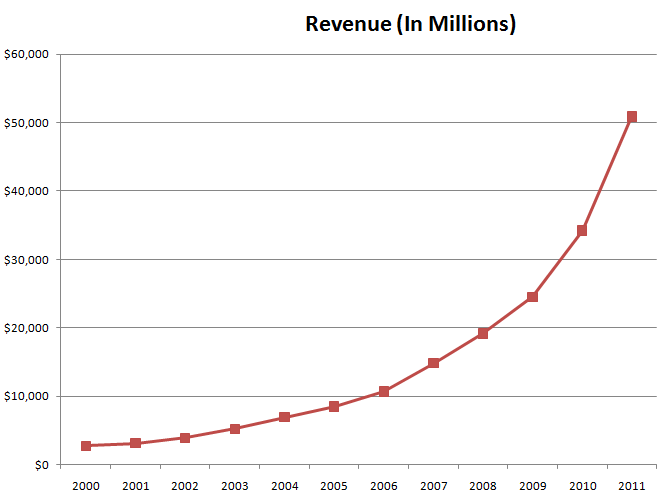
The supposed "source" referenced another study (sans link), so I can't get the answer to the obvious question: Was "less expensive" computed using the marginal cost to the customer of this particular purchase? Meaning, do other sites offer the widget for a few dollars less but charge a lot for 2nd day shipping?
I'm a Prime customer, and I've mostly given up on comparison shopping for small items. Amazon's prices are usually good enough that, especially coupled with the free 2nd day shipping, my effective "wage" for comparison is too low to make it worth it. Nevermind the "it just works" feature of Amazon's system (not just website -- the entire process by which a widget comes to my house).
My wife and I have forced ourselves to change our shopping behaviors and ask ourselves before thinking about leaving the house, "Do I really need this thing now, or can it wait a day?" $4 for overnight shipping is a bargain compared to wasted time, gas, etc. Stores are harder and harder to justify. That my wife finds ordering a bunch of clothing, trying stuff on at home, and returning what she doesn't want to be much more efficient makes me wonder what the future of retail clothing becomes. She sometimes even regards the "home try-on" process as superior because she can see how a new item of clothing looks with other, previously purchased garments.