Roku has made, in my mind, a horrible mistake by trying to be more than a hardware vendor. My first Roku was great -- select the app you want, play video. A lot of the streaming services were very immature and had terrible UIs; Netflix's was particularly good and Amazon remains one of the worst. They had a headphone jack on the remote (genius!) so that I could listen to content while other people in my household slept.
Then on the next generation, they started requiring a credit card on registration (boy did I have to hunt to find out how to set it up without that). I am perfectly capable of getting credentials for the services in question, why would I ever put my credit card information with a service where I never expect to use it?
Then they started peppering the UI with ads. The net effect here was basically just to make the interface less navigable by wasting a bunch of space advertising channels and programs on a device I paid for?
Finally they added a bunch of buttons to the remote to take you to specific services, which I only every use mistakenly, and of course includes "Rdio", where all I get when that button gets mashed is a message saying "this service no longer exists". Their interface with the big tiles is very well done; I don't need these shortcuts.
I would gladly pay extra for a version of the Roku that cut all of these features; like Amazon hardware and the "with sponsored content" where I can pay an extra $20 to get the vanilla version. It's still the best of the devices I've used (Amazon Fire Stick/Fire TV, Apple TV, Chromecast) but it's a shame they keep trying to suck more ongoing revenue out of it.
It seems like nobody is content to maintain a commercial product that does one thing: play media well. Plex Media Server is now going down the same path: They're trying to do their own streaming services, be a portal for podcasts, have a partnership with TIDAL, etc. They recently hijacked the home screen UI to shill their library of completely awful TV shows and movies that nobody wants to watch (though it can be disabled easily). Seriously considering a move to Emby at this point.
Well, at least in Plex's case I'd assume it's to generate a reoccurring revenue stream to continue development. I question how sustainable the "Plex Pass" feature is with so many people (at least that I know) who bought a lifetime subscription ages ago. I personally bought a Plex Pass for like $49.99 around 6 or 7 years ago and hasn't given them a cent since then. I support their efforts like Tidal and ad-based TV and Movies if it means I get new features without having to move to a monthly or yearly based subscription service.
The problem with just being a hardware maker is that it isn’t that profitable - especially selling commodity hardware. We see it with personal computers, consoles (they make most of their money on first party games and licensing for third party games), televisions, phones, set top boxes, etc. The only really successful hardware company is Apple. Even Samsung is only profitable because of its component and manufacturing divisions.
The extra $20 won’t help make Roku sustainable. Amazon can sell Fire sticks cheap because it is a gateway to their services.
"suck more ongoing revenue out of it"
I think there is also an ongoing cost to keep the software up to date, so there needs to be some ongoing revenue. It would be better if they just got referral fees for channel signups, or gave you a way to pay for no ads.
Maybe the best bit is being able to quickly search for an item of content across the various services and compare prices. There should be also be referral fees in that bit, enough to keep them from having to be an advertising platform.
There is ongoing cost, sure -- that's why they don't stop selling new devices to interested customers, and making new versions of the devices to convince customers to upgrade.
If they need to justify the ongoing cost, they should charge an amount that they can amortize over the lifetime of the device -- if they expect to get $0.50 in ad revenue per year from each customer (which seems ridiculously high) then that means the device has to cost ~$20 more to support that, which I'm totally okay with. Maybe not everyone would be, but at some point you have to rely on the fact that you're not selling a commodity device; you're selling something that is better than your competitors, or else why bother?
So if they keep selling to new customers, what happens when all of the customers who want one have one? Once you have a box that can stream 4K, why upgrade?
Besides there are no more dumb TVs. All TVs are smart and are “good enough” for most people. True Roku is embedded in most lowend TVs but the licensing fee is minimal because of the thin profit margins of most TVs.
Roku is a commodity device. Everything with an internet connection can stream Netflix and the other services that people care about.
Roku gets paid by Netflix and some other OTT providers, but it's nowhere near enough money to turn a profit. They need to sell ads to come anywhere close to making money. Their edge is that their software runs on really cheap HW, but it still costs money to manufacture and distribute. They probably lose a little money on every player they sell and make it back with ad deals and licensing agreements.
> "nowhere near enough money" ... "need to sell ads" ... "still costs money" ... "lost a little money"
This is their choice of price point. They could move their price point and make that not the case. Why bother losing a little money on each player -- they're making the best product out there.
What we're seeing here is a bunch of MBAs trying to squeeze the last tiny bits of profit out of the player to take advantage of their position as the market leader.
I dunno, I like my Nvidia Shield. They know(from talking with them in interviews) that Android TV is a significant threat. Their advantage right now is existing user base and the fact that their stack runs on very cheap HW. As processors become increasingly more powerful at the low end, expect Android TV to make Roku irrelevant(barring another screw up from Google, that is).
Google has been screwing up with Android TV for years. Do you really want an operating system embedded into your TV that has the horrible up date track record of Android?
Besides, the Roku CEO said that they try to keep the build of materials for hardware embedded into TVs below $25. How long will it take Android TV to run on hardware that costs so little?
There's a low end Android TV box on Ali Express for $26 and that was after about a minute of looking. I've had Android in my Shield for 4 years and it's been great. Keeping it maintained is up to the device manufacturer though, so I wouldn't expect that kind of reliability for $26. The market isn't there yet, so Roku has an advantage, but there's a reason why I turned down a job with them last year. There's a limited time where they will be viable. They're competing against some of the biggest companies on the planet. I have friends there and wish them luck, but I wouldn't go long on their stock.
Apple is never going to make a $30 streaming device to compete with Roku for a stand-alone device. They are now happy to have the AppleTV app on competitors and some TVs now support AirPlay.
Chromecast requires another device to actually use. That will never be good enough to be the only solution for smart TVs.
Amazon maybe. But they really don’t have a value proposition over Roku.
I 'upgraded' my parents Roku 3 with the Apple TV 4K, but they ended up going back to the Roku exclusively.
The remote on the Roku is much more intuitive and the d-pad allows them to select what they want with confidence. The apple tv's remote with its touchpad is unwieldy by comparison.
The Roku remote is an unsung example of great design. You can tell the parts are cheap, but it feels great, and is very easy to use. My partner is a luddite... It took roughly 30 seconds to teach her how to use it. She barely knows how the TV itself works!
Great design but poor implementation? My remote randomly stops working, there is often a long delay when I press a button, and it uses up batteries very more quickly than anything else.
It’s easily the worst remote I have ever used, although there are no problems with its design.
Different models of Roku use different technology for the remote. Since some of them use WiFi, they can suffer from connectivity problems like WiFi does in general. This will depend on the location and RF environment.
Maybe you got IR remotes? Maybe you live in a location with low levels of interference? Maybe your model doesn’t suffer from the design flaws that mine does?
I'm not sure it's much of a surprise to most people in the industry though. Apple always focuses on prioritizing design first - and then seemingly tries to find a way to bake in functionality that doesn't interfere with the prior. I do appreciate much of the minimalism Apple has brought to the forefront, but I think some are over the aesthetics to an extent when they impede the usefulness and/or productivity of the device. Lack of physical buttons on a remote, keyboard keys that are more focused on height and looks than feedback and quality, number of industry standard ports on devices, only using hard industrial designs vs using alternative materials that may go against the brand look and feel, and finally - likely the worst is that Apple has very little interest in designs that prioritize end user replacement or repair. I'm keenly interested in Apple v3.0. I think they'll need to reinvent themselves in the next decade. They lost me as a customer years ago - although now I'm forced to use their laptop hardware on a day to day basis which reinforces some of these design vs usability misgivings. Then again maybe it's all about quantity for Apple moving forward.
I had a Roku. Replaced it with a second hand Apple TV after software updates stuck ads all over the menu.
Pretty shit thing to do to paying customers, and one of the main reasons I’m so hesitant about IoT gizmos in general. Might start out great, but the provider can turn it to shit at a moment’s notice with no recourse.
They made a “more ways to watch” feature to automatically find when content is available on a streaming service, and then two years later gunked it up with advertising that you can’t disable short of turning off the feature entirely. Cool.
Makes you wonder if the real reason they built that feature in the first place was as an excuse to monitor everything you watch and monetize that data.
> Makes you wonder if the real reason they built that feature in the first place was as an excuse to monitor everything you watch and monetize that data.
It is. Roku has a lot of competitors (google, Amazon, all sorts of cheap mfrs) yet you seen their device in the impulse buy displays by the cash registers in Safeway. They aren’t making money on the sale of the device, it’s on the ads and more importantly the info stream.
Investors want to see a recurring revenue stream. Almost all hardware you'll eventually be able to "buy" will have some sort of avenue for recurring revenue stream. I recall reading something about the people who made LynQ (portable GPS thing) and investors wanted to know how they intended to keep getting money out of the people who bought it.
Probably best to buy hardware from privately owned companies then if your worried about this kind of thing. I don't mind paying an extra premium for hardware if it means I wont be bombarded by ads or be spied on.
Roku has, until recently, tried to support all of their devices with current software updates. It's very refreshing to see a company not abandon their devices. It's likely so they can maximize the number of clients, but it's still a nice gesture.
The weirdest thing is that the first "Roku" I owned was the box brought out for Now TV (UK streaming service, owned by Sky and heavily invested in Roku apparently), and it did not include Netflix!! It also did not include Youtube. I think it got added later, but that box was basically the small white Roku puck and the hardware was identical, save the firmware. Very odd to read that Netflix was originally the only service.
Edit : I also forgot - the main differences were the colour (it was white, and had the Now TV branding embossed in to the shell) and it was ridiculously cheap - it cost about $15 (£11) for the base model. They assumed they'd make up the cost on your subscription, as it was hobbled to not do much other than about 15 apps in their custom store.
I remember picking one up for ridiculously cheap back in the day (not the Now TV variant as another commenter bought, but similarly priced in the UK). Was great, but as soon as I got a Chromecast it became slightly redundant.
I continue to love my Roku and some of the oddball niche channels. But their ad serving is really immature. From seeing the same ad 3 times in a row to Overt aggressive insertions to sometimes freezing on an external ad feed to the rampant ad scams, it becomes frustrating to watch anything but The no-ad subscription channels which may not have that culty flic.
I don't mind supporting folks with ad viewing, but I also expect some variety, freq capping, and a bit of targeting. On the plus side, when all those Spanish ads come on, I can recognize almost half the words now.
Interesting that you bring this up because they made a great business decision to serve their own ads on the platform and they actually take a cut of all the ad serving. I don't think they would be as successful without that strategy.
But clearly that comes with the caveat that they have to design and maintain their own ad delivery mechanisms, which is very difficult.
I've bought TVs with Roku built-in, Chromecast built-in and other weird tries at streaming built-in. All but the Roku are basically worthless as the manufacturers did not ship upgrades, basically making what was a smart tv, just a tv. The Roku TV happily updates itself, and seems to have more and more channels and apps every week.
I had no idea Roku was born from Netflix, they did a good job at distancing themselves. I think this origin story also speaks to Reid fully understanding what he set out to do with Netflix, which is to stream entertainment over the internet. From the name to this move it seems very clear that's has taken that mission VERY seriously. It is really hard to invest in something so much and when you realize it is wrong viciously distance yourself from it. very few companies rarely pivot from their original mission. The only thing I would have done differently would be to open-source the hardware and Software of the Roku, basically creating a ton of competitors but at the same time pushing the mission of streaming movies further and getting Netflix to more screens. It still worked out regardless
The hardware initially was cheap, and had no placement ad deals. Possibly they were selling at a loss, who knows?, but for sure at one point their business model was to sell a hardware device that was good at streaming.
Did the early models not bundle apps for any services?
From what I’ve seen in the space, consumers want to spend $30-50, retailers want a giant percentage to put you on their shelves, and that doesn’t leave much for hardware assuming you want any profit. Then there’s support, design & R&D... A few ad deals or some sponsorship for placement/bundling and suddenly hitting an acceptable price seems almost feasible.
[edit] and of course price expectations are so low because the competition’s selling at-cost and making money on the side deals. You’re on the shelf next to something with ads but that doesn’t go on the price sticker.
The decision to separate out the hardware from the streaming was prescient -- no need to cannibalize deals with other hardware vendors, and get support for Netflix to be universal.
I only wish that Netflix had been as prescient about its original content division. If they had spun that out as another company, then it would have been possible for Netflix to continue to score content deals, instead of steadily losing content.
Spinning out the content might have staved off losing content for a year or so, but pretty much every single one of their 3rd party content providers has their own streaming service now, so the writing was on the wall for content deals even before their original content division started.
We don't have access to the alternate universe where this didn't happen. But Netflix was king of streaming -- other services had to bring themselves up in order to avoid being killed off by Netflix promoting their own content above those of other providers.
If Netflix had made it clear that they were not going to compete in content, then maybe those services would not have to exist.
Then again, maybe the move in this direction was inevitable; if the FTC had put its foot in to get something like the consent decree [1] with movie theaters and studios, then we would probably be in a world where streaming services had to differentiate on the quality of their streaming, platform support, application, funding model, etc. instead of just basically competing on the content, while steadily getting worse at everything else.
My main beef with the roku is the sluggishness of the UI. And I have a few of them in the house (ultras or whatever the top of the line one was as of six months ago. Amazon had a sale and I bought a few). I also have a bunch of Apple TV 4Ks.
Say I am watching Plex and then want to switch to Netflix and then maybe go over to Channels to watch some News on MSNBC. The Apple TV can do this without reloading the app or losing my place in the video. It is nearly instant. The Roku has to reload the entire app taking a minute and losing my place.
Interesting. I have the 4K Apple TV and sometimes apps feel extremely sluggish. Netflix clearly has some sort of compounding problem (maybe a memory leak) where simply scrolling through the app gets progressively slower until it’s nearly completely unusable. Killing and restarting the app fixes it temporarily.
I haven't noticed that in Netflix. But 80% of my use of the Apple TV is plex and a little app I wrote that reads directories on my computer running Apache and shows everything in a directory structure. And a bash script that runs through everything calling HandBrakeCli (if needed), generates thumbnails with ffmpeg, and then creates the xml.js file the app reads.
It took around six hours to build and I had zero experience with any tvos or ios development. Just a fun covid-project.
Sluggishness switching apps? Probably a result of supporting a lot of very low-end devices. I wouldn’t be surprised if the majority of their active devices in the field have very poor specs. And probably cost less than $100 when originally purchased—often way less. You’re not getting a bunch of fast SSD memory to suspend programs to, nor enough RAM to keep several open, on that kind of budget.
The CEO of Roku said in an interview on a podcast that their goal is to keep the build of materials needed to run the software under $25 for the TV manufacturers.
They do a damn good job. Sure opening an app takes a few seconds and apps tend not to do much to save and restore state when re-opened (the app developers could do more of that, if they cared to) but the experience in any given app is usually pretty smooth and snappy, considering what it's running on. It's a testament to how good UI can be even on fairly low-end hardware when you're not fundamentally screwing up performance, repeatedly, over several levels of abstraction.
On one hand, for a smart TV platform, there are a lot of positives. First and foremost it’s Switzerland. It’s neutral and everything is available for it - amazingly enough even AppleTV. As you said, the interface isn’t bad given the hardware constraints, and they support their hardware as long as feasible. I had a few Roku boxes back in 2011. I have three Roku TVs and will probably have two more by the end if the year. I also bought my dad one.
On the other hand, I hate the ads that take up half the screen and the hard coded buttons. The UI is decent, but not as responsive as my AppleTV 4K.
Our first streaming device was a Fire Stick. Talk about sluggish. Wow. We replaced it with a 2017 Nvidia Shield TV (even though we're an Apple house, go figure). Much better.
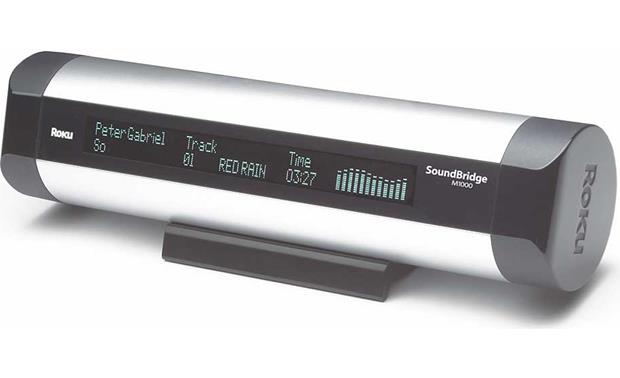
Original? I had the Roku Sound Bridge. It was purely for music. It hardwired to your stereo and could connect to your iTunes library by WiFi. You controlled it via a remote and the box’s display. When it worked, it was great.
It's complex and weird, Roku was started in 2002 by Anthony Wood, but then eventually he ended up a VP at Netflix? Reed I think saw a need for someone with a little distance and hardware experience (Wood founded ReplyTV) but not too much such that they couldn't own the experience.
All that said, the Roku streaming player by `Roku` is the first product they called the `Roku` so it's a fair way to title it.


Then on the next generation, they started requiring a credit card on registration (boy did I have to hunt to find out how to set it up without that). I am perfectly capable of getting credentials for the services in question, why would I ever put my credit card information with a service where I never expect to use it?
Then they started peppering the UI with ads. The net effect here was basically just to make the interface less navigable by wasting a bunch of space advertising channels and programs on a device I paid for?
Finally they added a bunch of buttons to the remote to take you to specific services, which I only every use mistakenly, and of course includes "Rdio", where all I get when that button gets mashed is a message saying "this service no longer exists". Their interface with the big tiles is very well done; I don't need these shortcuts.
I would gladly pay extra for a version of the Roku that cut all of these features; like Amazon hardware and the "with sponsored content" where I can pay an extra $20 to get the vanilla version. It's still the best of the devices I've used (Amazon Fire Stick/Fire TV, Apple TV, Chromecast) but it's a shame they keep trying to suck more ongoing revenue out of it.