One import thing with all Surface laptops that most people don't know:
> Support is limited to the country you purchased the device in.
Eg:
- If you buy an Apple laptop, and need a repair, they'll fix it if it's in warranty, regardless of where you are.
- If you buy a Microsoft laptop, and need a warranty repair done in a different country, Microsoft won't help you.
I purchased a Surface Book (which I love) in a Microsoft store in the US. It's been sporadically doing this since a couple of months after I unboxed it:
Microsoft UK won't fix it. Even when I travel to the US I'm not sure I'll be there long enough for Microsoft to do the repairs. I love the hardware, but this policy is really bad. I paid for the top of the range laptop and expect support for it.
Edit: I've raised this with Microsoft Support in the past and they've simply restated the policy and closed the case as resolved. When I attempted to escalate it, they told me to post a complaint to Microsoft's legal department (?!?).
"If you buy an Apple laptop, and need a repair, they'll fix it if it's in warranty, regardless of where you are."
This can be misleading. I bought my Macbook Air in Portugal, had 2y warranty there. Then moved to the UK and the brick stopped working. Went to an Apple Store and since it was after the 1y warranty offered when you buy it in the UK, they rejected replacing it for me. Eventually went to Portugal to visit my family and got a new brick from the same store in 5 minutes. On a curious note, there's no Apple Stores in Portugal yet so in this particular case it was even more interesting to realise how much better help I got from a non-official store.
I bought a MacBook in the UK and some time later when I was in the US they keyboard became faulty.
I walked in to a US Apple store and explained the problem. The Genius person agreed there was a fault and then started tapping away at their computer. He umm'ed and ahh'ed and called over a manager.
At this point I was thinking they were going to reject the warranty repair for some reason, but the manager ended up apologizing that they didn't have any UK-style MacBook replacement keyboards in stock, and they couldn't work out how to order the part in on their US system.
As it happens I had moved to the US, so getting a US keyboard was actually a bonus. I told them I was happy with a US keyboard, and 10 minutes later I was leaving the store with it installed in my MacBook.
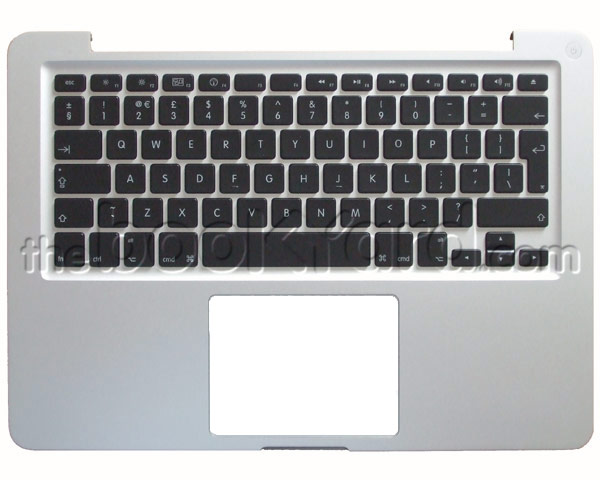
Pardon my ignorance but what is the difference in the UK style keyboard vs the US style keyboard? Is the 4/$ replaced with the 4/£ key? Wouldn't this be problematic when programming (for example variable substitution on the shell etc.)?
There are two separate issues that need to be distinguished:
1. Physical keyboard layout (how keys are placed). There are two primary standards: ANSI (mostly US) and ISO (most of Europe). The most notable difference is the shape of the Enter key (L-shaped on an ISO keyboard and straight on an ANSI one). ISO keyboards also have one extra key and a shorter left Shift to make space for it.
2. Logical keyboard layout (how key presses are interpreted). This is what is printed on key caps, but it doesn't have any relation to the actual scan codes being sent. Many languages use their own accented characters (e.g. ąęćłóńżź for Polish) and historical preferences (e.g. QWERTY/QWERTZ/AZERTY), but this is implemented in software.
Logical layout can be easily configured in the operating system, and for touch typists it doesn't really matter what is printed on the keys, but differences in physical layout can take some time to get used to.
PS. I'm Polish, I live in the UK, and I type on a US mechanical keyboard with ANSI layout :)
I'm sitting here staring at my US keyboard and scratching my head. All of the Menu shortcuts align perfectly with the UK keyboard's iconography but not the US keyboard which opts for labels. And why do we have a key labeled both enter and return?
Historically the Macintosh distinguished between Enter and Return. IIRC on the Lisa the Return key was on the main part of the keyboard and the Enter key was on the numeric keypad. In many apps they did the same thing, but I think in LisaCalc the Enter key would enter the contents of the selected cell and leave it selected. Return would do the same and then select the cell below. IIRC the Mac version of Microsoft Multiplan did the same.
On the MBP I'm typing this on, the key is labeled enter in small type and below that return in larger type. I think holding down the fn key and pressing that key does the enter action, while without fn it does the return action. I am pretty sure my full-size Mac keyboard has return on the main keyboard and enter on the numeric keypad. I think the Lisa was the same.
IIRC there was no Enter key on the original (128K) Mac keyboard, but the optional numeric keyboard had the Enter key.
Apple have an old user interface guideline that basically said that the main keyboard was for primarily typing text, while traditional data entry was secondary. Hence the function of the Return key was strictly to insert a carriage return into some text. And so no Enter or Control key on the original keyboard. As a kind of substitute Apple introduced the Command (Swedish campground) key, but it wasn't a direct mapping of Control. And IBM further muddied the waters by introducing CUA. By the time of the Mac II the default keyboard was much more compatible with common computers. It was a time of rapid change.
I noticed that in the US almost all signage uses text instead of symbols. For example, writing "No smoking" on a sign, where in Europe you would have a crossed-out cigarette.
I don't really understand why this is done, since well-made symbols are also understandable for illiterate people or those not speaking the language.
In Europe you have a lot of languages and nations mixed. People who design signs know and care about that. In US you have a huge country where everyone speaks the same language. People who design signs don't even know it's a problem that needs to be solved.
Explain to me the difference between these three signs: 1. a bicycle on a blue circle, 2. a bicycle on a white circle outlined in red, and 3. a bicycle on a blue square.
On the other hand having to read all that in text while you're riding by isn't very reasonable either. Complex signage is only as good as your knowledge of it, which maybe is why passing a driving test in Europe is so much harder; it requires knowledge we just get from being able to read in the US.
It was a comment for Americans who might not know the signs; not really an argument.
But really, if you're driving then you should have done a driving exam and test in your home country. Then you're ready to drive from Romania to Ireland (with the help of some tunnels and ferries) and be able to manage reading the road signs the whole way. This is possible because of a (mostly) shared iconography. Of course, on a bike you don't need to pass a test but you should do a little bit of studying to make sure you don't get a fine.
The US doesn't need this because it uses English.
This is also completely distinct from keyboards which aren't even QWERTY across Europe. There are also AZERTY (France) and QWERTZ (Germany) and some countries like Belgium have all three in the same office as people have different preferences. And pair programming is as painful as you can imagine.
I agree, some signs need to be learned, and traffic signs are a prime example of that. On the other hand, many signs with fewer fine distinctions can be made with pictograms that require no prior knowledge of conventions.
That being said, traffic signage is a mixture of both, where some meaning is given by convention (e.g., white background and red border means "not allowed"), and then extrapolated by pictograms (bicycles not allowed, trucks not allowed, pedestrians not allowed).
Edit: A certain cultural context is of course always required, to know for example that a crossed out cigarette applies to smoking in general and doesn't mean that you can smoke pipes, cigars, or bongs. Such 'misunderstandings' only happen with QA engineers though. ;)
blue circle: something you MUST do (in this case, indicates a path that can only be taken by bycicles)
white circle with red outline: something that is forbidden (the road is forbidden for bycicles)
the last one indicates a bycicle-only path crossing the road, 150 meters before it you should see a white triangle outlined in red ("danger") with a bycicle inside it
By the way, the Mac I'm using now was bought in Australia and the keyboard has a rectangular Return key and the modifiers labeled using text rather than icons.
The UK keyboard layout still has $ above 4, but it has £ above 3. In order to get #, you have to hit ⌥3. You can also hit ⌥2 to get €. I think a couple of keys like backslash and backtick are moved around as well.
Inclined to disagree - depends on your keymap and software you use. If I were to add keyboard shortcuts to my program I'm sure as hell not gonna use a key that I can't get to on my keyboard.
On German keyboards it's even 'worse' though. Because ;, [ and ] are used for ä, ö and ü, [ and ] are Strg + ⇧ + 8 and Strg + ⇧ + 9. Same for { and }.
(Strg = Ctrl)
So any keyboard shortcut involving those and ⇧ or Ctrl is pretty much impossible.
Having recently (5 months) switched from UK to US layout, I find `/~ location to be more convenient on UK layout.
First, it's somehow easier to type ~ on UK layout (no weird finger twists) - helps quicker to get to your home directory when navigating terminal.
Second, I use cmd+1/2/3 to switch tabs a lot. Cmd + ` rotates windows. You can imagine it's very easy to mix up 1 with ` and instead of having the tab you want, end up with completely different window. Really breaks my flow often.
I do not mind enter key that much. In fact I think US one is better.
> helps quicker to get to your home directory when navigating terminal.
Protip: "cd" with no arguments normally takes you to your home directory. Though if you need to reference something in your homedir using a global path without changing directories, ~ is probably still the fastest way to do it.
I had to take my MacBook in three times durnig its life, for the same issue (wifi/bt issues because of aircard connection to VM)
Every single time I was told to make an appointment. Which take about 3 days to get. They took the laptop and spend a week fixing it (every time!) My experience at Multiple Apple stores in Southren Ontario.
Detail worth knowing: under the EU warranty the first year is covered by the manufacturer, the second by the reseller. If you buy a MacBook outside an Apple Store, after the first year you're supposed to bring it back to the place you bought it. There is even a difference between ordering it online through apple.com and buying it at the brick and mortar Apple Store as those are legally not the same. In practice though I have never had a problem having it fixed on the spot at an Apple Store but this is mostly because Apple cares about their customers.
plain wrong.
there is a 2-year warranty within 6 months the seller needs to actually prove that it worked correct. after that you (buyer) need to prove it.
there is __never__ a warranty (under law, the manufacturer can make a special guarantee like apple care of course) between the manufacturer and the buyer (at least in the eu and might change if seller == manufacturer) the warranty is always between the _seller_ and the _buyer_. if the seller is something like amazon than you give your defective product back to amazon (amazon than of course has the same warranty between his seller/manufacturer).
b2b is the same (but also has some special rules and might be (more) country dependant).
Edit: Well the most important fact of course is that there is no "eu law" there are just policies that the countries than can enforce/make a law out of it (http://ec.europa.eu/info/law/law-making-process/overview-law...) well european can than make claims against the country, but sometimes they even fail to do that.
EU directives are in practice no different to national law. Sure, countries can refuse to enforce them but they can refuse to enforce their national law as well. If we are at that stage all bets are off. "Can enforce" sounds like this is optional which it is really not. Courts refer to EU law just like they do to national law.
> "Can enforce" sounds like this is optional which it is really not. Courts refer to EU law just like they do to national law.
In practice it's a mess system. Courts choose and pick however they want to implement the directives, even in countries where courts should be independent the ruling political countries have enough pressure on the courts. Sometimes they even enforce invalidated directives which is unlawful but then again if a country has enough money they could just pay the fines. Therefore there is so much unhappiness about the EU in the general populace, local politicians blame the EU laws, EU politicians blame the local laws and no one is accountable, it really sucks and isn't what a democracy is supposed to be.
Of course there can be a manufacturer warranty, there just isn't a legal requirement for one (and it can have rules like "talk to the dealer if you bought it recently, we cover you only when you can't go through them anymore")
Precisely. Most of the time electronic device manufacturers set the commercial warranty[1] to one year, but that's purely their prerogative. That's why you can go the Apple Store with your MacBook during the first year[2] even if you bought it from FNAC or Amazon or whatever. Apple Care extends that duration to three years, and possibly sets additional coverage terms like with Apple Care +.
On top of that, as merb said, following the EU directive, local law (in France, that's the Hamon bill) says the legal warranty of compliance[0] covers for the whole two years. So Apple can tell me to buzz off past the first year if I bought their hardware from Amazon, but so that I can go through them directly instead of going the roundabout way through the seller during the first year. The seller can never tell you to buzz of (as long as you duly prove the defect past 6 months as merb said), even during the time a possible commercial warranty applies, but it can be more efficient to go through the manufacturer directly, as is the case with Apple Stores, but I've been using this for other brands where the wait list was months long through the seller whereas the manufacturer fixed it in less than a week and even footed the bill for the postage.
It is perfectly clear to me, in the very link you have posted:
"This 2-year guarantee is your minimum right. National rules in your country may give you extra protection: however, any deviation from EU rules must always be in the consumer's best interest." (which is the case of UK law).
From your reply I understand you didn't notice the second link, probably due to my bad formatting. Compare your analysis of the first link with what Apple states in the second. I don't understand how they can say it.
I saw the link, but I thought your issue was with the 2/6 year thing.
I still don't see any problem. Apple states that you get 1 year of "Apple" warranty, which allows you to get your product serviced by Apple, at no cost, independently of where you bought it.
Beyond that date UK law will apply, but since it applies to the seller, and not the manufacturer, they say to contact the seller (as I said in another post, a bit cheekily, since they will be also the seller in many cases).
Unless of course you buy Apple Care, that will allow the same level of service as the 1 year warranty...
The legislation doesn't have a fixed period, it provides a vague 'reasonable use for a reasonable period of time' type clause. This was a £1700 laptop, so I had a right to expect it to last longer than 3 years, which was supported by claims on Apple's website.
Therefore, Apple either has to say "our laptops are only good for three years", or say that particular laptop was defective and fix it.
It is possible that it could be three years old but they had purchased it new and owned it less than 2 years. Just means that particular one sat in inventory for awhile.
For a long time. Note that there is a difference between the manufacturer's warranty (voluntary) and the seller's warranty (two years mandatory, "Gewährleistung" in German). When Apple talks about their warranty they mean the former.
> If you buy an Apple laptop, and need a repair, they'll fix it if it's in warranty, regardless of where you are.
The reason I wrote that is because I've purchased multiple MacBook Airs in the US and Apple UK has always serviced them. Obviously your experiences are different.
Counter experience (but it was 2009). I bought a used white macbook from craigslist in 2008. I'm from the US, and live in the US.
Was traveling in UK, and laptop keyboard cracked - big hole in the side of the keyboard. Took it to Apple store in London - forget which one - replaced at no cost in about 3 hours.
EDIT: per goatforce5's comment, I had a bit of 'umm' and 'ahh' when I was in London. I thought it would be "out of warranty", but it was the same thing - "not sure we have any parts to fit the US keyboard". They did find one, but that was the potential hold up.
> Was traveling in UK, and laptop keyboard cracked - big hole in the side of the keyboard. Took it to Apple store in London - forget which one - replaced at no cost in about 3 hours.
Same thing happened to me (white Macbook, cracks on the keyboard). AFAIK it is a known defect from this series and Apple accredited repair shops were instructed to replace the keyboard for free no matter if the warranty was still valid or not.
It's still a good thing though, I know no other brand that would do that for free 4 years after the warranty expired (in my case).
I've gotten 4 or 5 replacements, for free. I always have spares (instead of carrying them with me). So always claim "Dude, weird, I just bought this a few months ago."
Given the past drama, I think Apple just swaps them, to avoid any further bad PR.
And, frankly, these adapters should last forever. For comparison, I don't think I've ever replaced an HP or Dell adapter.
I never replaced those either, but HP adapter did melt the plastic cover on one of my laptops and I started to see the naked wiring (on the DC side). I bandaged it with some tape.
> in this particular case it was even more interesting to realise how much better help I got from a non-official store.
I don't think that's an outlier. In my experience, going to an Apple Store is always more frustrating, time-consuming, and expensive (if you are buying upgrades) than going to an authorised reseller.
So, how does the reverse work? If I buy a laptop in UK with 1 year, can I go to Portugal and get service between year 1 and year 2 because they offer 2 year warranty? There may be a chance I suppose...?
Good to know. I'm about to buy an MBA in Portugal.
IIRC, there's an authorized retailer in Lisbon (Chiado). Warranty-wise, I wonder how buying one there factors in vs. getting one from anywhere that sells them new (like FNAC).
This was a HUGE issue for me. I purchased a surface 3 for my daughter before she when to China for a year of study.
Halfway through the school year it started having phantom touch issues. Which can be frustrating to the point of tears... you are writing a paper, and suddenly the cursor is somewhere else magically and the input is going to the wrong paragraph or even worse, the wrong app.
I was so impressed at first at the technical support, they seemed very responsive. But the first support persons promise of help with-in days never materialized. And the number they gave us to get back in touch with them no longer worked. The second support person promised to exchange the surface. But the exchange location was in Shanghai not Beijing. A trip not possible for a teenager in a foreign country.
Time and time again they made promises which were never fulfilled. I swore MS off forever at one point. I finally figured out how to disable the touch screen so that the surface was at least usable as a laptop.
To give some MS credit they did promise to exchange the surface for a new one when she returned home. Even though it was technically out of warranty by a week at that point. By then there were strong yellow lines on the screen for some reason. Their exchange turned out to just be a repair for the touch screen (after waiting two weeks). But it was obviously the same machine because the lines where still there. Finally some strong but nice words with the manager of the MS store got them to exchange the surface that day.
The fact they they were willi to repair an issue which cropped up and was reported under warranty is in no way special. They are only fulfilling an obligation.
My employer is in New Jersey, I'm in Canada. They purchased me a Surface Pro 3 at my request, and I've never had a problem getting support directly from Microsoft, including 2 48-hour replacements.
This used to be called "gray market" (grey?) items. Items that are imported not through official channels (for example camera lenses that are often for sale from the bigger dealers in NYC).
There is no warranty, but the lenses are cheaper (due to currency values and the price the companies set it can be a little cheaper, but sometimes a lot cheaper). In the old days the prices in magazines for equipment where in 2 columns, US and imp (imported by us).
In your case you bought the computer overseas an brought it in yourself.
Some places that sell gray market lenses will cover the warranty for you in place of the manufacturer (probably a good bet, the if the items are well made and they have an in house repair)
Reading that page is just weird - how are US lenses different than other countries? Are other lenses made to substandard specs? In which case, what the fuck?
In this case, I just hope they want to squeeze every last dollar out of their buyers, like Hollywood does with movies.
Otherwise, regional/country-locked sales/warranties make little sense.
In some cases, they are different products. During times, when Airport cards were separate products, I got mine in the US. That was a mistake - I had to live with one channel less. Today, the Samsung Galaxy S-series phones are different in US and the rest of the world. There are many other examples.
In other cases, it is about squeezing every last dollar out of the buyers. Mostly those in UK and EU.
My US-bought MacBook has been fixed under warranty in the US, Canada, Thailand, and Singapore.
There are some country-specific restrictions- here in Mexico, they are unable to fix Apple products from other countries sometimes due to government restrictions; e.g., they were unable to replace my girlfriend's iPad screen at any price at the Apple Store since it was bought in the US.
my macbook that I bought in US was repaired 1 week before the end of the warranty in Italy. Not sure if it's policy or I just got lucky tho (dead monitor, and immediately after that webcam not starting -> logic board replaced, also under warranty even if the time was technically up)
I've had my USA purchased MacBook Air repaired (many, many times - I use my laptops out in the field in very rough conditions) -in both Canada and Singapore. I don't know about other countries, but those two countries honor USA warranties on the MacBook Air.
> Apple reserves the right to change the method by which Apple may provide repair or replacement service to you, and your Covered Equipment’s eligibility to receive a particular method of service. Service will be limited to the options available in the country where service is requested. Service options, parts availability and response times may vary according to country.
It sounds like you can get treated differently based on where you are.
I think this is to deal with products/parts which aren't available in different regions. As some people have mentioned, getting a keyboard replaced in a different region that has different keyboards isn't possible(unless you accept the keyboard used in that country).
Similarly if your power brick dies, you can't expect an apple store to carry power bricks for all possible outlets(especially with the iPhone style bricks that don't have removable prongs).
Still sounds like you'll get supported to that countries ability to support you.
I think you're confused. I bought a Macbook in New Zealand, and had it's motherboard replaced for free in the US. Then later bought a new Macbook in the US and it serviced in Germany.
Maybe they didn't have to do it, but I bought a Macbook Air in Korea (no official Apple stores there, strangely) and had the body repaired for free at an Apple store in Japan. The repair was minor, so maybe that was why they did it? But it certainly seemed like they were going to take care of whatever problem I had.
I've travelled with Mac laptops since the Powerbook days and every single time it has been fixed in the country I was in. The warranty checks done on Apple Support make no reference to the country of purchase.
False. From the UK terms for MacBook Pro (I checked the terms from the Netherlands as well, and they are similar):
You may obtain service in the European Economic Area (EEA) countries and Switzerland without paying any shipping and handling fees. Outside this region, service options may be limited. If a given service option is not available for the Apple Product in such country, Apple or its agent shall notify you about any additional shipping and handling charges which may apply before rendering service. Shipping and handling charges will not apply in countries where Apple does maintain an Apple Retail Store or Apple Authorized Service Provider (“AASP”) (a list of current service locations is provided at locate.apple.com/uk/en).
IANAL, but basically this seems to say: (1) in the EEA you can get your support no questions asked, (2) outside the EEA you may have to pay S&H charges, unless there is an Apple Store or Reseller.
"If the product is portable, meaning that it can operate independently without a power cord, you may obtain warranty service worldwide. However, service will be limited to the options available in the country where service is requested. If the product is not portable, warranty service may be restricted to the country where the product is purchased."
1. Even in the EEA, you may have to pay shipping and handling.
2. Where there's no representative of Apple (and I'm not saying there should be), can you really say "Apple service is available, you just have to pay shipping"? The reality is closer to "You will have to ship it internationally". Apple isn't "doing" anything here but accepting a package in a country where they have service locations.
I've had my MacBook Pro, US bought, fixed in India. Within the 1 year warranty period. No charge! (F1 INFO SOLUTIONS & SERVICES PVT LTD) This was not an Apple Store/Center, but an Authorised Service Center.
I had a 2012 Macbook Air from Europe and it had some issues. I had no problems getting it fixed in the US. Not sure if it was because I had Apple Care.
Indeed, Apple maintains stock of "foreign" devices (e.g. Japanese phones which use different payment hardware than US phone are in repair stock in the Palo Alto store). This can be a problem too, e.g. you move to the US with a Japanese iPhone which doesn't do Apple Pay in the States; if it breaks Apple will replace it with another Japanese phone only. I assume this reduces the sum of customer complaints (since most people with a Japanese phone in the US are tourists returning home).
As for the keyboard discussion below: when the mechanical layout is the same, or close, you can just change it from the preferences. I poured green tea into my powerbook 1400 in Tokyo; while waiting for a repair part I used it with an external Japanese keyboard set to US letter layout. I would get confused if I looked down so just typed with a blanket or jacket over my hands and it worked great. (Ironically that model was made in Japan, by Sony I believe, and was only serviceable by sending it to Japan. Since I was there I got to watch someone fix my machine while I waited).
I have gotten Applecare repair support in India where there were no Apple stores (at the time).
Another obnoxious one: Employee purchased devices will be denied warranty if you aren't that employee. I'm assuming this is to prevent people from "trading" devices or something. I got one from a friend who worked there, and they refused to even provide with an OS image much less do any repairs. The serial number was just blocked.
This is categorically not true of apple or several other brands i've gotten gear this way from.
My two times dealing with Apple Care have been pretty good, but a friend had a horrible experience with them. I haven't had to deal with a warranty issue out of the country though.
I have the exact same problem with my Surface Pro 4 (among many many others that Microsoft refuses to fix).
As a pro-tip you can disable the touchscreen in device manager. Even if you do this the pencil/pen will still work on the touchscreen, but 'touch' will be disabled, so you can can still use it in a pinch but without it being a non-starter device.
I stay in India, and considered buying an iPhone on a trip to the US. But Apple India told me that US-bought iPhones may not be serviced in India, because Apple service centers in India aren't Apple-run, but franchisees.
Apparently, if there's a service center directly run by Apple, they'll service it regardless of the country.
That's incorrect. I returned a MacBook to Amazon.in a week ago. There was no fault with the piece I received, I just changed my mind about it. I've returned other products to Amazon too, like a phone that was slightly defective and other electronics.
I've spoken to people who sell products online on Amazon.in and other marketplaces. All of them accept returns and write off the losses on those as overhead of doing business.
Not eligible for return if the item is "No longer needed"
I've confirmed this with Amazon. You may have been successful, but nobody should buy a product assuming they can return it, when the policy says otherwise.
If they ever changed the policy I could fly from Ireland to the US buy the I7/512GD SSD have a coffee and fly home all for the same price of buying it in Ireland.
Currently a €584 difference in the price between the US and Ireland. Any tax minded people know if this is caused by Irish VAT or pricing structure?
Its even €60 cheaper in the UK, €50 cheaper in Germany.
Not always true, I bought a Surface Pro 3 from USA and the power brick was not working, the Microsoft branch in the Netherlands replaced the entire laptop and I live in Romania. I received the replacements one by one (separate packages for laptop, brick, pen) from Germany.
My surface book has had the same phantom tap issue in the past. It seems to be resolved now, whether by driver updates or other magic unknown to me. It hasn't happened in months now even though I'm using it about 10hrs per day.
In my case, I bought a Surface 3 via an employee discount program and it didn't come with English-capable Windows. It was a PITA, Microsoft doesn't do international as well as Apple.
Eh, is it really? How many customers does this really affect? If you're from a European country and buying in the US, odds are you're trying to avoid VAT.
I'm a so-called digital nomad and travel to a lot of different countries a year. The fact that Apple offers worldwide warranty means that I'm more likely to buy from them (even though OSX is becoming more and more buggy over the years).
I'd love to buy a surface pro but not having world wide warranty would stop me from buying it.


> Support is limited to the country you purchased the device in.
Eg:
- If you buy an Apple laptop, and need a repair, they'll fix it if it's in warranty, regardless of where you are.
- If you buy a Microsoft laptop, and need a warranty repair done in a different country, Microsoft won't help you.
I purchased a Surface Book (which I love) in a Microsoft store in the US. It's been sporadically doing this since a couple of months after I unboxed it:
https://www.youtube.com/watch?v=0_f85KlC5Bc
Microsoft UK won't fix it. Even when I travel to the US I'm not sure I'll be there long enough for Microsoft to do the repairs. I love the hardware, but this policy is really bad. I paid for the top of the range laptop and expect support for it.
Edit: I've raised this with Microsoft Support in the past and they've simply restated the policy and closed the case as resolved. When I attempted to escalate it, they told me to post a complaint to Microsoft's legal department (?!?).