In those thousands of years of history, did we ever have multiple cities with populations over 10 million people? Did we have electricity demands? Were the agriculture/ food expectations the same?
Are you really trying to make the argument that if a significant chunk of the population is forced into unemployment, that's fine we'll just tax all the stuff that automated jobs away and it'll all just work out? Panic sets in if unemployment hits like 10% because of all the negative consequences it has on societal outcomes. Just assuming the government is gonna magically be able to reallocate resources it gets from taxing the automated systems that replace human work is a pretty insane thing to expect to work imo.
There are a hell of a lot of assumptions baked into your thinking that need to be explained and probably put under more scrutiny.
Take "We don't have to all commit to back breaking labor for ~100% of our functional life just because this is the system most of us were born into and we don't know any better" for example.
No we don't need to do manual labor 24/7, but what people generally do need is a purpose. Purpose here meaning something akin to meeting an expectation that they contribute to their own survival and to the benefit of society, even if abstractly. Take a look at most NEETs and I don't think you're going to find healthy thriving individuals, I think you're going to find people who are resigned to life and checked out. We didn't evolve to sit on our hands.
Increase education funding, mandate a couple of levels of free choice liberal arts/philosophy type courses to ensure people have to expand their thinking a little, focus on critical thinking and media analysis skills in primary and secondary education - not as the main focus but certainly as important, civic building classes.
News media gets harsh anti-monopoly rules: no more billionaires owning every station in every jurisdiction, in fact no more conglomerates whatsoever. More independent funding for local news: I'm content for a bunch of these to go bankrupt on a regular basis but we'll sponsor more people putting out independent journalism.
At an international scale spin off an entity like the Federal Reserve which would be the Federal International Reporting Bureau with some iron clad rules about funding changes and the sole mission to baseline the availability of boots-on-the-ground international journalism, with a mission charter the citizenry must have accurate reporting to understand how they will choose leaders to guide international politics. This one would be tricky to get right, I suspect you'd probably end up tying resource allocation to government funding alotments and the like via some automatic mechanisms.
The first and last are probably pie in the sky: really let's start by shredding a couple of media empires into 50 different fiefdoms and let them battle it out for views, but there'll be no more mergers or cross-media ownership that's for sure.
Personally I'm all for breaking up the media conglomerates. Especially the news. There is a tremendous amount of group-think from professional elites who all goto the same universities and then go work in the same newsrooms. When combined with endless M&A it creates insular monoculture with low tolerance for opposing views in most of these news outlets.
> At an international scale spin off an entity like the Federal Reserve which would be the Federal International Reporting Bureau with some iron clad rules about funding changes and the sole mission to baseline the availability of boots-on-the-ground international journalism
That sounds great in theory, but given the recent scandals at the BBC and uncovering of systematic bias there we can see how fragile such institutions can be. Even without M&A driving it the BBC has become a primarily leftist monoculture.
> Increase education funding, mandate a couple of levels of free choice liberal arts/philosophy type courses to ensure people have to expand their thinking a little
Sounds great, but also prone to systemic bias. Universities in general have become echo chambers in liberal arts departments.
Perhaps combine that with options for doing national service of some sort that would balance out education. Afterall, classroom learning only gives one aspect of life and experience. Often just exposing people to new places and environments broadens their outlooks.
"you can only work on one thing at a time. It should always be the highest priority item"
The thing you're working on in any given moment is the highest priority thing (in "your" mind) by definition though. If you thought something else was higher priority, you would be doing it instead.
The only "argument" against that requires a third party who deems a different thing higher priority than what you're currently working on, and that leading to a mismatch of what is "highest" priority is, and you're lack of doing it in the moment.
Maybe it's a stupid question, but how does the poliovirus "work"? Like at this scale, the DNA strand is still pretty visible and a decent-ish percentage of the polio virus in size.. is it just a ball with DNA inside and not much else? How does it pack enough DNA to replicate itself into it's own size at that scale?
You’re pretty close actually. It’s a single strand of positive-sense RNA 7.5kb long, and a protein capsule. +ssRNA is treated as mRNA by the host and is directly translated into proteins.
Is it not sort of implied by the stats later: "Revenues from Claude Code, a program for coding that Anthropic introduced earlier this year, already are said to be running at an annual rate of $1 billion. Revenues for the other leader, Cursor, were $1 million in 2023 and $100 million in 2024, and they, too, are expected to reach $1 billion this year."
Surely that revenue is coming from people using the services to generate code? Right?
A back-of-the-napkin estimate of software developer salaries:
There are some ~1.5 million software developers in the US per BLS data, or ~4 million if using a broader definition
Median salary is $120-140k. Let's say $120k to be conservative.
This puts total software developer salaries at $180 billion.
So, that puts $1 billion in Claude revenue in perspective; only about 0.5% of software developer salaries. Even if it only improved productivity 5%, it'd be paying for itself handily - which means we can't take the $1 billion in revenues to indicate that it's providing a big boost in productivity.
If it makes a 5% improvement, that would make it a $9 billion dollar per year industry. What’s our projected capex for AI projects next five years again?
I don't think you actually looked very closely, so it's weird you've doubled down on that lol
Item 2 of "Permissions and Restrictions" says you aren't allowed to "circumvent, disable, fraudulently engage with, or otherwise interfere with any part of the Service (or attempt to do any of these things), including security-related features or features that (a) prevent or restrict the copying or other use of Content or (b) limit the use of the Service or Content;"
where "content" is earlier defined as basically anything Google/YT sends you (which would include the ad).
A quick google search also takes you to a pretty straightforward statement from Google/YT: "When you block YouTube ads, you violate YouTube’s Terms of Service."
Definition of "Content" in their Terms of Service:
Content on the Service
The content on the Service includes videos, audio (for example music and other sounds), graphics, photos, text (such as comments and scripts), branding (including trade names, trademarks, service marks, or logos), interactive features, software, metrics, and other materials whether provided by you, YouTube or a third-party (collectively, "Content”).
Where is advertising defined as "Content"? (EDIT: For clarity, this paragraph is my own words; the previous paragraph was the quote from the ToS).
Further, there's the "Our Service" paragraph:
"The Service allows you to discover, watch and share videos and other content, provides a forum for people to connect, inform, and inspire others across the globe, and acts as a distribution platform for original content creators and advertisers large and small."
The service acts as a distribution platform for "original content creators and advertisers", two different categories. There's content (made by content creators) and there's what advertisers produce.
If Youtube wanted to define advertising as part of the Content (capital letter because in legal matters, definitions in the contract matter, and that's the term that they defined), they had plenty of opportunity to do so.
The statement by Google that blocking ads is a violation of their ToS is, of course, their opinion. But what ultimately would matter in a lawsuit is the contract. And nowhere in the contract do they state that advertising is part of the Content.
Their best argument in a lawsuit would be that adblocking is "circumventing" part of the Service, because they have defined being a distribution platform for advertisers as being part of their Service. But considering that the actual function of adblocking is simply not making HTTP requests, it would be hard for them to make that hold up in court against a skilled lawyer.
I've looked at it, and I came to the conclusion that the "advertising is part of the Content" argument does not hold up to the actual terms of service, and that the "adblocking is circumventing the Service" part does not hold up either: to say that something running on my browser, that makes no attempt to change their code and only skips certain HTTP requests, counts as "circumventing" features is a stretch. It's the best argument, so thank you for making it. But it's just not strong enough to hold up to the "If Youtube wanted to explain that adblocking was a violation of the ToS, they had plenty of opportunity to lay that out in detail in plain English (well, lawyerese) in the ToS itself" argument which any skilled lawyer would present in court.
So I'll grant that it's possible to read "adblocking is a violation of the ToS" in the terms, if you peer at the penumbras and emanations of the wording. But at no point did they take the opportunity to lay it out in clear language. And statements from a spokesman are, legally speaking, worthless; only the language of the contract matters in a court case.
P.S. I've upvoted you, since you've actually taken a real look at the Terms of Service, unlike the guy making that grocery store analogy.
I'd say generally accepted by the majority of English speaking/western society? If someone said they were going to "pirate a movie" there's next to zero chance they are referring to the distribution side of that endeavor.
I feel like OP isn't asserting anything even remotely controversial in that definition lol
Um... no? Maybe that's true for English speakers (I'm not a native speaker, so I won't make assumptions), but thinking that Western society views it that way is a big stretch, especially with streaming sites. While some might admit to watching something on a pirate site, many people don't refer to it as piracy when they're using a streaming service.
Who is claiming that using a streaming site is piracy? No one is saying that lol
What the guy was saying is that circumventing payment to watch a movie = pirating, and it seems like you're saying that's not the case. It seems you're saying that people saying "pirating" are referring circumventing payment and distributing, which is not at all what the majority of people mean by pirating.
Pirating != distribution for the vast majority of how people use that word - it means consuming the media without paying for it.
So "streaming service" (the term you used) implies something like Netflix or Hulu or something, which is a paid service and definitely not piracy. At least in the USA that's how that term is used.
I'm not actually sure what you're issue is at this point. In the US, if someone says they're going to "pirate a movie" they are assuredly not talking about how they are going to be the one distributing the movie, just consuming it - whether that's on a "streaming" site or just downloaded and watched locally.
It seems like your argument is that "piracy" is much more specific than how people actually use the word. SO it's a semantics thing, and that's really fucking stupid lol
With respect to the Apple ad, I don't think that was about AI at all - it was for the newest iPad Pro right?
I interpreted it as look at all these cool arts/creative things that we've managed to compress into a single sheet of glass. I sort of get how people interpreted it as just maliciously destroying those things as a means to an end, but that feels like an intentional reading of bad faith to a company that is generally very creativity-minded.
I wonder if it would have received less blow back if they had "hidden" the actual crushing of the objects and just showed them entering a chamber with an implied compression... but the visuals of everything exploding in the hydraulic press are pretty cool and a more dynamic way to convey the "look at what all we've packed into the product" message.
> I wonder if it would have received less blow back if they had "hidden" the actual crushing of the objects and just showed them entering a chamber with an implied compression...
Yes. You just wrote a better ad than Apple's highly paid agency.
In my opinion, marketing relies on targeting people's initial guttural feelings. That's why car commercials always show the cool part of driving, to activate the monkey brain "ooo shiny!" mentality.
So, I think criticisms of how people feel are fair game. Meaning if someone doesn't have a logical argument that's fine to me - because marketing is emotional manipulation anyway, so if your emotions got manipulated wrongly then the marketing failed.
> but that feels like an intentional reading of bad faith
I don't think it was an intentional reading in bad faith at all. I think the reaction is a result of the general public's existing perception of the state of things: big tech is here to monetize and worsen everything you love.
Whether or not that's an accurate perception, it is a very common one. The tech industry seems to view itself as unalloyed "good guys", but that's not generally how it's viewed among normal people.
These posts always feel like people are fetishizing some "utopia" where everyone should want to live in an imaginary fully walkable, meticulously maintained, pristine city. The comparisons of like a 2 square mile section of the nicest parts of a European city to areas of the rural US that have land areas larger than many European countries feels... at best, idealism run afoul.
Should we look at rural areas in Europe? I spent 3 weeks this summer in a small town in Spain. I could smell manure if the wind came from the right direction. And yet, I didn't need to get into a car, because the town center of this rural town, population 5 thousand, lives next to each other. The farmers go to the fields further away by car if they need to, but the kids walk 5 minutes to the high school.
The total land area is also irrelevant: Spain has a pretty low total population density, but that's because most of it is empty. The people live close to each other anyway. You can have a house 20 minutes by car anyway, and thus live 20 minutes away from the hospital instead of 3 minutes if you really like yards that much, but barely anyone does, because the car life is expensive and a hassle
Example of small town from "flyover state" in Denmark: i.e. area with very few jobs, very low house prices, everybody moving away, houses on the market forever. We call this for "the rotten banana" as the area is shaped as a banana and the economy is rotten.
Still very walkable and nice for kids.
Price for these houses is ca. $100_000 (some little over, some little less).
Barcelona is also a very walkable city (across the entire area of 2 million people, not just the very center) and is definitely the upper end of Spanish income.
A big part of this is long term cultural: medieval towns (and even much older) were all clustered very tightly into blocks with city walls against attacks, those slowly evolved into the vast majority of the towns & villages in Spain today, and have left a culture where flats and dense city centers are the expected norm and the primary model, even for towns surrounded by empty space. You can easily find small towns of apartment blocks and tight wall to wall houses in windy city centers, of just 1000 people, surrounded by fields for miles.
The Spanish would argue that surburanism is generally less enjoyable (walkability, community, socialability) and less secure (houses are easier to rob than non-ground floor flats) while dense apartment/etc living is better value (less land cost, shared maintainence in apartment blocks) and provides better airflow/heat management & opportunity for balcony views (attic flats etc).
my rural area had twice the population but probably 10x the size. There was nowhere to "walk" to. We are talking about a 2-3 mile drive to the only "supermarket" in the town center, which was probably smaller than many modern corner stores. everything of interest was 2-3 miles away: the schools, the church, the liquor store, and that's really all there is (they did build a 99 cent store there, so that's neat).
It's not like the land was wasted with parking lots. It's just as generic a desert setting as you can expect. Hot, tumbleweeds everywhere, Sand as far as the eye can see in any direction, etc. It's all single home housing so it could be denser, but that's pretty much the only benefit of living there; I grew up with a half acre yard (full of sand and an awkward tree in the middle, but actual land) and it gave my grandparents some piece of mind when we went out to play.
The US is not large and not sparse compared to the rest of the world in general or compared to Europe in particular. This argument pops up every time but it just has no basis in reality. There are sparse (rural) and dense (city) areas everywhere. The ratio between this type of area is different in Finland compared to the UK, just as it differs between Alaska and New Jersey. The density of the US is roughly the same as Europe. (Around 100/sq km)
But walkable cities can be both 1M population or 10k population. What applies to a footpath in a city of 1M applies to a footpath in a city of 10k too.
Truly rural areas usually aren’t the topic of these discussions nor sites like strongtowns. For obvious reasons.
Oh sorry Google fooled me, when asking for US pop density it answered per sq. mi (96) and for EU it answered per sq km (106). The numbers are less similar with the same units then….
Some sparse countries like Ukraine aren’t counted in EU however.
But I think the point you make about Sweden also applies to anywhere. How much land a country has that isn’t a city isn’t very relevant to how its cities look. If the US had 10 more alaskas or the EU had 10 more Swedens wouldn’t matter for how cities are built.
In the debate about Covid there was a trope about Sweden being so sparsely populated that no lessons could be drawn from there. Yet looking more closely it’s obvious that this is merely because most areas of Sweden have almost no people, and it’s rather Urbanized. I.e it’s actually locally dense but mostly empty.
“Mean distance between humans” is a much better measure of population density, both for city design and epedemics. Australia is a prime example where on average, 3ppl per square kilometer live. A figure that says nothing about actual population density.
Curious, have you ever lived for an extensive amount of time in a walkable European city? As a person who was born and raised in suburban East Coast car-hell and then moved to Europe, I would never want to go back. I still want a luxury car for rare drives to the countryside, but I hate it every time I have to go back to North American car-dependent cities, except for the nicer walkable downtowns.
I've given up on "arguing" with people on this thread, but FWIW, I have lived in Berlin and Frankfurt both for extended periods of time (2.5years total). I'll leave it up to you to decide if those are walkable cities or not. I also currently live in NYC, which is, if not walkable, anti-car.
My boys (one with ASD and the other with ADHD) are often extremely loud. When they are, you can hear them clearly from a surprising distance away from my suburban USA home even when they're still in the house.
It's not about everyone. It's just about building enough nice walkable cities for people who want to live in them.
It's not a utopia. It's about prioritizing people over traffic. Prioritizing the experience of being in the city over the convenience of getting there or driving through.
And it doesn't even have to be a city. The same idea also applies to suburbs. You can have good transit connections to the city, apartment buildings and local services in the core, single-family homes a bit further away, and large parks and forests within walking distance. Suburbs like this are typically more sparsely built but more densely populated than American suburbs. They also tend to be nicer once you leave your home.
*For people who can afford to live in them. I imagine most people (like me) aren't out in the boonies due to claustrophobia. We could use more walk able cities, but those we do have in the US tend to be the most expensive neighborhoods.
Don't overdo with by adding "meticulously maintained, pristine city", I mean okay this might be a side-effect once people start walking more and have the time to look at their environment close up and maybe even thrown their single-use coffee cup into a bin instead of out the car window.
European cities were in most of their cores built before the car or didn't allow highways to cut them up, followed by more demolishment for parking space. Add zoning laws that only allow single homes with no business in their center and you get suburbian where you can only escape with a car.
> I mean okay this might be a side-effect once people start walking more and have the time to look at their environment close up and maybe even thrown their single-use coffee cup into a bin instead of out the car window.
Definitely not in NYC, everywhere you see the disdain with which NYCers treat their communal environment
I hear these complaints all the time about any conversation that involves making a change for the better.
At the end of the day, there's a lot of people that are fundamentally anti-progress. If it makes things better, they don't want it. Doesn't matter what it is past that. Their solutions to our problems are either that the problems don't exist, or if they do, we should do nothing and they'll solve themselves.
Look, nobody is looking for a utopia. Nobody expects that. But making small steps in a better direction is a good thing.
Look around you at your cities. Is this the best it could possibly get? Do you truly believe this is the apex of human society? I know you don't. Why, then, do you (and others) feel so ideologically opposed to making some amount of change? I just don't get it.
That's a fairly bold claim to say that I oppose making any change for the better lol... anyway..
Having grown up in both rural and urban areas, and having seen many articles like this one, they tend to (more often then not) read like this: "I know what's best for everyone, and if only these rural hicks would just let us do what's best for them everything would be perfect". That's mostly where my frustration lies - not with weather or not some town has a sidewalk or not.
> Look around you at your cities. Is this the best it could possibly get?
As someone who has spent significant time in parts of Minnesota very near to Northfield... yes. I genuinely think these places are as close to the "best it could possibly get" as is realistic to achieve. This is based on my experiences and my preferences having lived in these places. Your opinion seems to differ from that, which is why you seem to think that these places are in need of being changed - but do you even live in a place like the one in question?
> Why, then, do you (and others) feel so ideologically opposed to making some amount of change?
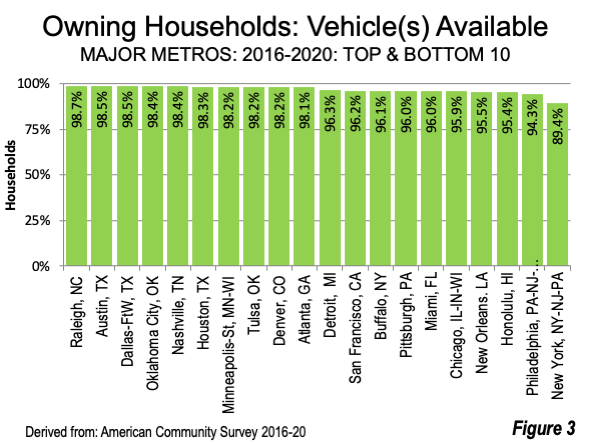
Because it is not at all obvious that these are actually improvements for the people who actually live there. As I tried (and maybe failed) to convey, places like Northfield, MN were designed for cars - nearly everyone (~98%) who lives in Minneapolis has a car [1] and would use their car to get to the Allina clinic in question. Even if this was an excessively pedestrian friendly intersection, it would still be true that an overwhelming majority of people going to this clinic would drive.
Look around on google maps at this clinic and intersection [2] - there aren't even many residential places within walking distance in the first place. So in this case the suggested "improvement" would only even be relevant to a small number of people. And I'm not against making changes that only benefit a few people, but there needs to be a real case for people needing (or even wanting) it. And that needs to be to stand up against...
The fact that there are tradeoffs to rebuilding infrastructure to be more walkable. If there was some magic wand that just made this intersection walkable with absolutely zero tradeoff, then sure, wave your wand. But the truth is that there are real factors that matter: cost (both up front and mantainence), restricted access (during construction), and the not insignificant cost of having people idle in their cars at this intersection (which crosses a pretty significant thoroughfare for people in the Northfield to get to commercial areas from their homes - which are not a walkable distance away) to name a few.
Again, my frustration here is not that people are trying to make "progress". My frustration is that this "progress" is often defined by people who don't have to deal with the consequences, and that articles like this do not ever seem to actually account for the actual experience of the people who live in these places.
I would turn the question around to you: Why, then, do you (and others) feel so ideologically compelled to push changes onto others and expect them to share your definition of "progress" even when they tell you otherwise?
To be clear I'm not saying you personally are necessarily opposed to all changes. But, when I see people very obviously over-exaggerate, like "looking for a Utopia", that's the impression you give off. That you're ideologically opposed to this particular change, and not reasonably opposed to it. Like, the fact any amount of this change is happening at all is too much for you.
> people who actually live there
See, again, nobody is saying this should be a thing for everyone. Nobody is really going to target rural areas with any infrastructure changes because, well, nobody cares. And that's the draw of rural areas - you don't have that infrastructure. People don't live in towns of 2,000 people they want rich public accommodations, lol.
> don't have to deal with the consequences
Au contraire, you have it backwards. The Suburbs are the ones who do not have to deal with the consequences of urban sprawl. They're subsidized, on welfare, by the dense, walkable parts of the city. Because dense areas are simply more efficient and produce MUCH more taxes. That money is then taken and given to the suburbs, who cannot exist on their own.
> are tradeoffs
Sure there are. But this position of "we've tried nothing ever and we're all out of ideas" is lame. Sorry. There are trade-offs in our current status quo but because it's status-quo you refuse to acknowledge them as tradeoffs.
Again, nobody is claiming magic wand or Utopia. You have the expectation that we can make things better for pedestrians with absolutely no friction. And when the solutions don't meet the absurd expectations, YOU set for yourself, you deem the whoooole idea bad.
That, to me, is a mindset problem. In order to justify your need to maintain the status-quo you have to construct a logical framework where change can never be good, ever.
> push changes
Simple, we're not. These things are decided democratically and you're seeing more and more people talk about it because, well, they want it. Sorry if that makes you feel as though you're becoming a minority. I don't know what the future holds and maybe in 10 years everyone will be drooling over motor vehicles and concrete again. In which case, good for you.
The reality is these ARE being talked about by the people they affect. These aren't random outside forces. These are me, and others, living in our communities who want change in our communities. We don't want change in your community. Nobody cares about the boonies and that's the entire draw of the boonies. If you want people to start caring about you move out of the boonies. Then, I'm sure, you'd be very upset.
As an outsider (as in: not American) I notice that a lot of the details, especially downsides, are left out.
I grew up in a commie block in a region of Europe where cities are fairly sparsely populated (approximately half the density of Amsterdam and close to 1/8th that of Paris proper).
I see it as a good middle ground that while still walkable, doesn't have the aforementioned downsides of dense city living, like:
-Noise, or actually the contortions you have to go through to keep it at acceptable levels. The inverse square law really does a number on people who live in a densely populated area with a night life or renovations going on (there's always renovations going on).
-Garbage disposal. I remember spending a mostly sleepless night in Bilbao because guess when is the only time a garbage truck can actually pass and collect refuse in a timely manner? Modern humans produce way more garbage than their 19th century counterparts.
-General tidyness. I want to see Tokyo one day because it appears to be the only large, densely populated area in the world which isn't filthy. I'm not even talking about trash. It's the puddles of animal (and human) urine scattered here and there.
-Lack of green spaces. Land is precious in densely populated cities, so you can't have this sort of stuff. Meanwhile when a dog has to go, they have to go, hence the previously mentioned puddles.
-Cost. Did I mention land is precious? The other day my friend showed me the sort of palace he can buy by selling his two bedroom in a commie block. Especially in recent years cost alone has pushed many people out of cities.
-Cost (of living). My car-oriented hellhole of a suburban mall where I sometimes do shopping has more stuff and at prices 30% lower than all those neat corner shops. The reason is that everything, from rent to logistics is expensive in a densely-populated area.
I could go on, but this is the gist. You couldn't pay me to live in a place with more than 5000 inhabitants per square kilometre.
I agree with most of the points, but I'm surprised about the "lack of green spaces" you mentioned. From my experience, Europe has far more and better urban parks than what I have seen in the US. The general atmosphere of European parks is something that I will forever miss while living in the US.
... but what are "these posts"? Because this post compares good and bad examples within the Minneapolis-St Paul metro area. This isn't a comparison of some cherry-picked European city with the rural US. It's a comparison of good and bad points within a mid-sized US city.
Further, a bunch of these examples seem like cases where the resources for the better design would not have been out of reach. The case where there are only crosswalks on 3 sides of an intersection so pedestrians need to walk the long way around (and wait for the light to change multiple times) would be straight-forward to have done right. The example in the "convenience" section where the path forces pedestrians to take a longer path, would have taken only a modest amount of additional concrete to address. Examples where there's too little demarcation between the sidewalk and street often have a green strip on the other side of the sidewalk. The same amount of space could have been used with the sidewalk shifted over and a green strip with trees placed between the street and sidewalk. None of these are "idealism run afoul".
I want to live in an imaginary fully walkable city. Now I live in Montreal, for the context see video https://youtu.be/_yDtLv-7xZ4
It's very good overview of what is wrong with the best* city in North America.
Not covered in this video: high rent/cost of owning compared to the local relatively low salaries (most of Montrealers agree) and in general low quality of hosing (many Montrealers got very irritated if I bring that).
And frankly, even your rural non-homestead areas could use some redesigning. Now you make it unsafe walk in what are basically villages, the quintessential walkable settlements that we've invented back in prehistory.
I'm quite familiar with Minneapolis, and you're right it is fairly suburban - but suburbs are a phenomenon of the world after the invention of the car. Car ownership rates in suburbs are incredibly high, like 90%+ in most suburban areas (https://newgeography.com/files/job-access_03.png). Minneapolis has a ~98% rate of car ownership, and places like Hopkins and Northfield were designed knowing that most of their citizens live far enough away from places like schools/grocery stores/movie theaters/offices/etc that they will need a car anyway.
And this isn't like a chicken or egg thing where people aren't walking because it's not nice to walk. The car came first, and then the suburb (as we know them) came second. These places were designed for cars. We're talking about 20-30+ min walks each way to get from most homes to the nearest "commercial area". Even if it was the walkable utopian dream of tree lined sidewalks and pedestrian-centric intersections, it won't change the fact that the vast majority of people would not choose to walk, and so it makes sense that these places are optimized for the way people actually get around.
What does car ownership rate have to do with anything? Even in a suburb with 100% car ownership, I want to walk - not drive - to buy milk, when possible. Walking the dog should ideally be possible from every single home without even having to walk or cross a road.
Walkability is as important in a suburb where everyone can drive as it is anywhere else.
There are many parts of the world where suburbs are shapes very differently, and while they support cars, they don't need them. The 0.3 acre plot, the street with no commercial activity... those aren't requirements for suburbs. Madrid has many a suburb that is far denser, grows upwards, and is centered around a train station.
And that's great for those places. But why do people feel compelled to make relatively new US suburbs more similar to old suburbs in Madrid? No one is trying to make suburbs in Madrid more like suburbs in Iowa - I'm voicing frustration that the reciprocal is not true.
This is part of a larger frustration where it feels like a very common thing that people in cities want to enforce their expectations and cultures onto rural places that already have their own way of being.
Forcing places to be a certain way by law is like writing an essay without the letters 'D' and 'O'. Possible, but it's really tying your hands behind your back.
"Their own of being" = putting a fist in everyone's mouth by <<forcing>> housing to be exactly the same type (single family detached house) and <<banning>> any other type of activity, even compatible ones like light commercial.
A sign of confidence, you know, the typical American fashion, would be to allow mixed zoning for compatible uses and see what happens, "invisible hand" and all.
And the examples given here can make the walking experience better, for a similar amount of total expenditure, without meaningfully changing the situation for drivers. Some things the author never suggests in this post:
- removing lanes of traffic to make more space for pedestrians
- reducing speed limits
- increasing gas taxes
You're reacting like advocating for a better pedestrian experience is somehow an attack on drivers, but that's totally not what this post is. Instead, the author points out places where they're already creating affordances for pedestrians (sidewalks, crossings with refuge medians, new curb ramps) but are doing it in a way that is not impactful.
You can make it a more comfortable for people to walk on the sidewalks that they're actually paying for, so the option of walking 20 min to the grocery store is more feasible, normal, appealing, without expecting that people in car-dependent neighborhoods are going to give up on car ownership.
> so it makes sense that these places are optimized for the way people actually get around
This is a misleading framing for two reasons:
- high car ownership does not imply that people don't want to also feel comfortable walking in their own neighborhoods. You can own a car, but walking your dog or walking with your family to a park or walking to the nearest store can still be a welcome option. People can get around in multiple ways, choosing different options at different times for different purposes.
- to the extent that a high proportion of trips are in a car, part of that is because the other options are crappy because of the argument you're making
We can have pleasant walkable neighborhoods and cars, and your kids can walk home from school and you can drive them to costco on the weekends. End this nonsensical pretend conflict between the two.
Suburbs (especially newer ones) were indeed designed for cars, but it is also illegal to change them, because of road requirements, parking minimums, zoning restrictions, separation of uses, etc. The qualities of a good suburb are desirable, but let's not pretend like they're a natural outcome of choices.
I'm a car person but 20/30 mins of walk to get some coffee with my dogs sounds very pleasant (iff the pedestrian crossings are safer as the article proposed)
Just because the majority are fat doesn't mean it's healthy
Sure, and you can do that 20/30 minute walk if you want, there are many parts of minnesotan suburbs that are, in fact, very walkable already. On a weekend, that is a nice thing to do - but the day-to-day life that the majority of people live shouldn't be optimized for that.
I'm not sure why you're shoe horning body weight into this - that's a whole separate can of worms that tenuously related, but not relevant to the fact that these places are so spread out in such a way that walking isn't feasible for a myriad of other very practical and immediately relevant reasons (weather, ability to organize child care/education, ability to run errands before/after work, time spent "commuting", etc.)
In a lot of places it's close to impossible to do what you're saying. There are no side walks. Many suburban streets and especially those bigger roads (stroads) are horrible. No shade because no trees because HUGE ADS SHALL BE VISIBLE FROM CARS, lots of dangerous driveway exists every 5 minutes that you can't even walk in peace lest you are run over by a huge truck, etc.
Streets are dangerous for cyclists (and I mean the regular cyclists, commuter/grocery shopping style, not the lycra-clad racers).
There are modern ways to design infrastructure, it isn't even a lot more expensive than the old fashioned way, and it makes for a lot more pleasant environment for everyone. Even drivers get to enjoy it because... people start walking (under 1km) and cycling (under about 5-7km), so a lot of car traffic just vanishes. So the remaining car drivers get to vroom-vroom a lot more :-)
Even with plunging cost and increasing capability... this is talking about infinite compute, it's essentially impossible to achieve by definition.
You could dedicate the worlds entire compute to the Goldbach's conjecture function he wrote up - it (would/might) never complete. You could 1000000x the worlds compute and it (would/might) never complete. It's not even a problem of compute speed, it's a problem with infinity.
Agreed, but there is plenty of utility that can be harvested, if we can direct our attention adequately.
Also: humans have the ability to arbitrarily redefine words, and believe those redefinitions! There is a surprising amount of leeway in this simulation.
> Agreed, but there is plenty of utility that can be harvested, if we can direct our attention adequately.
Only for problems no worse than O(n^m) where m is not much more than 1.
Greenend (the domain name in the link) is, or so goes local legend, named after an actual street in Cambridge, quite close to where I was working a decade ago; one particular job, we'd just changed a file format for a mobile app, and the upgrade process was taking 20 minutes on test devices. The other engineer insisted it couldn't possibly be improved despite the two observations (1) it was fine before the upgrade, and (2) it was fine once the upgrade was complete. After a bit of digging, I found an O(n^2) operation we didn't need, and turned 20 minutes into 200 ms.
Increase the available compute by a factor of 1024 in an O(n^2) task, only compensates for n growing by a factor of 32.


Are you really trying to make the argument that if a significant chunk of the population is forced into unemployment, that's fine we'll just tax all the stuff that automated jobs away and it'll all just work out? Panic sets in if unemployment hits like 10% because of all the negative consequences it has on societal outcomes. Just assuming the government is gonna magically be able to reallocate resources it gets from taxing the automated systems that replace human work is a pretty insane thing to expect to work imo.
There are a hell of a lot of assumptions baked into your thinking that need to be explained and probably put under more scrutiny.
Take "We don't have to all commit to back breaking labor for ~100% of our functional life just because this is the system most of us were born into and we don't know any better" for example.
No we don't need to do manual labor 24/7, but what people generally do need is a purpose. Purpose here meaning something akin to meeting an expectation that they contribute to their own survival and to the benefit of society, even if abstractly. Take a look at most NEETs and I don't think you're going to find healthy thriving individuals, I think you're going to find people who are resigned to life and checked out. We didn't evolve to sit on our hands.
reply